Cambodia's Two-Speed Economy: Tourist Arrivals Fall 43.7% While Garment Exports Rise 7.2%
Factories and regional trade are carrying an economy that has lost Thai visitors, Thai fuel and most of its migrant jobs across the border.
What to know
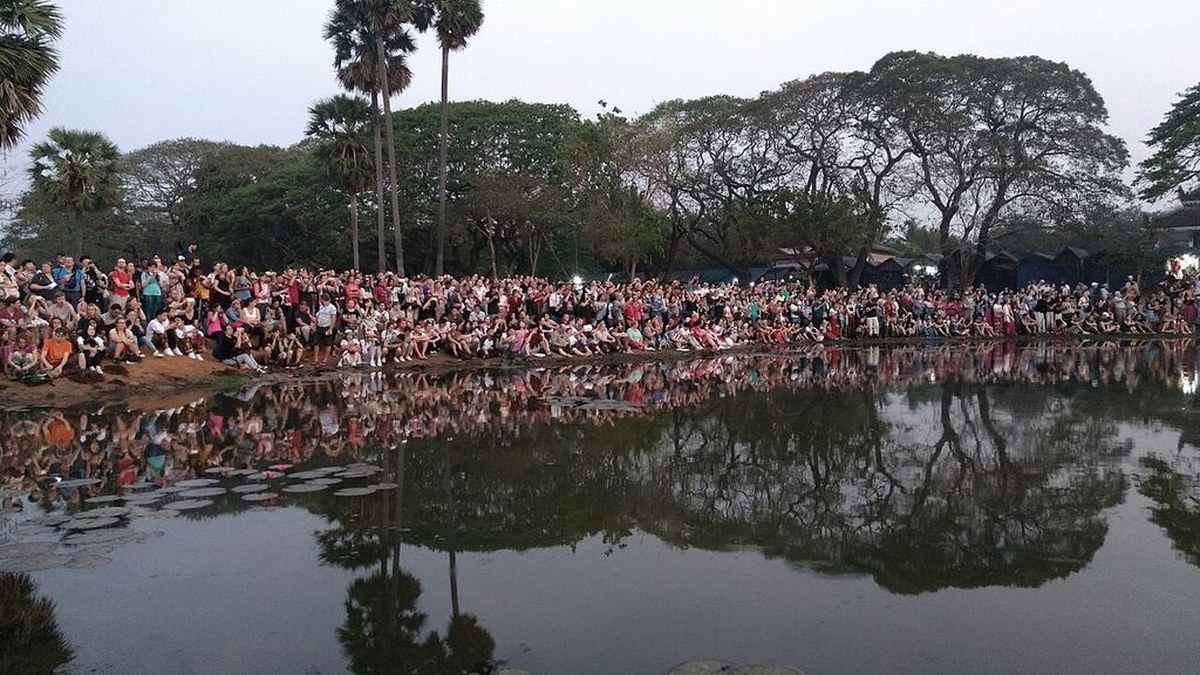
- Cambodia received 2.46 million international visitors in the first nine months of 2026, down 43.7% from 4.37 million a year earlier, the Ministry of Tourism said.
- Exports of garments, footwear and travel goods rose 7.2% to $11.76 billion in the first eight months, according to the Ministry of Commerce.
- The Ministry of Economy and Finance cut its 2026 growth forecast to 4.1% in August, from an initial 5%.
PHNOM PENH
Cambodia's foreign tourist arrivals fell 43.7% in the first nine months of 2026, to 2.46 million from 4.37 million a year earlier, according to a Ministry of Tourism report released Oct. 27. Over roughly the same stretch, the country's garment, footwear and travel goods exports rose 7.2% to $11.76 billion, Ministry of Commerce data showed.
The split matters for investors with exposure to the Mekong economies. Cambodia's factories sit inside regional and Western supply chains used by apparel brands and Asian manufacturers, and their output is holding up. Its services side, which depended heavily on Thai visitors, Thai fuel and jobs in Thailand, has been hit hard since the border conflict with Thailand in July 2025.
Cambodia's tourism slump goes beyond Thailand
The losses are broad. Vietnamese arrivals fell 28% to 651,486 in the nine months, and Chinese arrivals dropped 27.6% to 643,314, the ministry said. Visitors from the United States slipped 5.6% to 140,276.
Tourism Minister Huot Hak blamed "regional and global challenges," according to the Vietnam News Agency. He cited negative reports about online scam networks, tension along the Thai border and conflict in the Middle East, which he said pushed up fuel prices and weakened demand for travel.
Thailand was the biggest single source of the decline. Before the conflict, about half of the 400,000 to 500,000 foreign visitors Cambodia received each month came from Thailand, according to a May study by researchers Richard Yarrow and Sovath Kenh for Singapore's ISEAS - Yusof Ishak Institute. From July to November 2025, Thai arrivals fell from about 150,000 to 200,000 a month to about 15,000 to 20,000, the study found.
Cambodia received 5.57 million international tourists in all of 2025 and earned about $3.87 billion from tourism, Vietnam News Agency reported. At the 2026 pace, arrivals would fall well short of that total.
Factories and ASEAN trade carry the load
The export side tells a different story. Apparel and textiles brought in $8.78 billion in the first eight months, up 7.3%, while footwear rose 7.5% to $1.5 billion and travel goods gained 6.5% to $1.48 billion, according to the Commerce Ministry figures reported by Xinhua. The sector made up 48% of Cambodia's export value. It runs through more than 1,800 factories and branches employing about 1.1 million workers, most of them women, labor ministry figures showed.
Regional trade is also growing. Cambodia's trade with ASEAN members rose 16% to $14.26 billion in January through September, and trade with the European Union climbed 14% to $5.03 billion, the Commerce Ministry said. Total foreign trade reached $58.48 billion, with ASEAN accounting for 24% and the EU for 8.6%. Thong Mengdavid, deputy director of the China-ASEAN Studies Center at the Cambodia University of Technology and Science, credited closer supply-chain links and agreements such as the Regional Comprehensive Economic Partnership.
The United States remains the key market. Cambodia sent 35% to 40% of its exports to the U.S. in 2024, against about 3% to Thailand, the ISEAS study said. That concentration explains why the loss of Thai trade has hurt less than its headlines suggested; the ISEAS authors wrote that the impact "appears milder than might be expected."
Lost remittances and a lower growth forecast
The hit lands on households. About 1.3 million Cambodians worked in Thailand in 2024, and nearly 1 million have since returned home, according to the ISEAS study. Remittances totaled about $2.8 billion in 2024, roughly 6% of gross domestic product. Thailand's labor ministry said in March that it would admit no new Cambodian workers.
Energy supply has shifted as well. Thailand supplied a third to a half of Cambodia's fuel imports before the conflict, and mineral fuel imports from Thailand fell 49.8% to $471.12 million, the study found, as Cambodia turned to suppliers such as Singapore. Cambodia's 2026 garment minimum wage increase was held to $2, under 1%.
The government has adjusted its expectations. The Ministry of Economy and Finance cut its 2026 growth forecast to 4.1% in a mid-year review in August, from 4.2% in May and an initial 5%, citing higher fuel prices, the Thai border dispute and the effects of online scams. Agriculture and tourism grew more slowly than planned and garments slowed slightly, while export-oriented manufacturing outside garments was expected to be revised up. Cambodia grew faster than 7% a year in all but three years between 2000 and the Covid-19 pandemic, according to ISEAS.
For comparison, Thailand's own tourism has also weakened this year, as its September economic data showed.
The next checkpoint is the Commerce Ministry's January-to-October trade report, which will show whether export growth held up into the fourth quarter as the tourism gap persists.
Sources
- Vietnam+ (Vietnam News Agency): Foreign tourist arrivals to Cambodia plunge 43.7% in nine months (Oct. 29, 2026)
- The Star (Bernama-Xinhua): Cambodia makes US$11.76 billion from garment exports in first eight months, up 7.2 per cent (Sept. 12, 2026)
- The Star (Bernama-Xinhua): Cambodia's trade with Asean, EU posts double-digit growth during Jan-Sept (Oct. 12, 2026)
- The Star (Xinhua): Cambodia trims its 2026 economic and GDP growth forecast due to global and regional headwinds (Aug. 23, 2026)
- ISEAS - Yusof Ishak Institute: Cambodia's Economy before and after the 2025 Border Conflict (May 12, 2026)
Our standards: Capital Times reports under the principles set out in our Editorial Standards and Ethics Policy. Spotted an error? Report it to our editors.