Bank of Thailand Holds Rate at 1%, Lifts Export Forecast to 22% on AI Demand
Policymakers voted unanimously to hold for a fourth meeting, lifted the export outlook from 14% in June and said rates could rise if growth is strong enough.
What to know
- The Bank of Thailand's Monetary Policy Committee voted unanimously on Oct. 28 to keep its policy rate at 1% for a fourth straight meeting.
- The central bank raised its 2026 growth forecast to 2.4% from 2.3% and now expects exports to rise 22% this year, up from 14% forecast in June.
- Assistant Governor Don Nakornthab said rates could gradually rise if the economy is strong enough, and the next meeting is Dec. 23.
BANGKOK
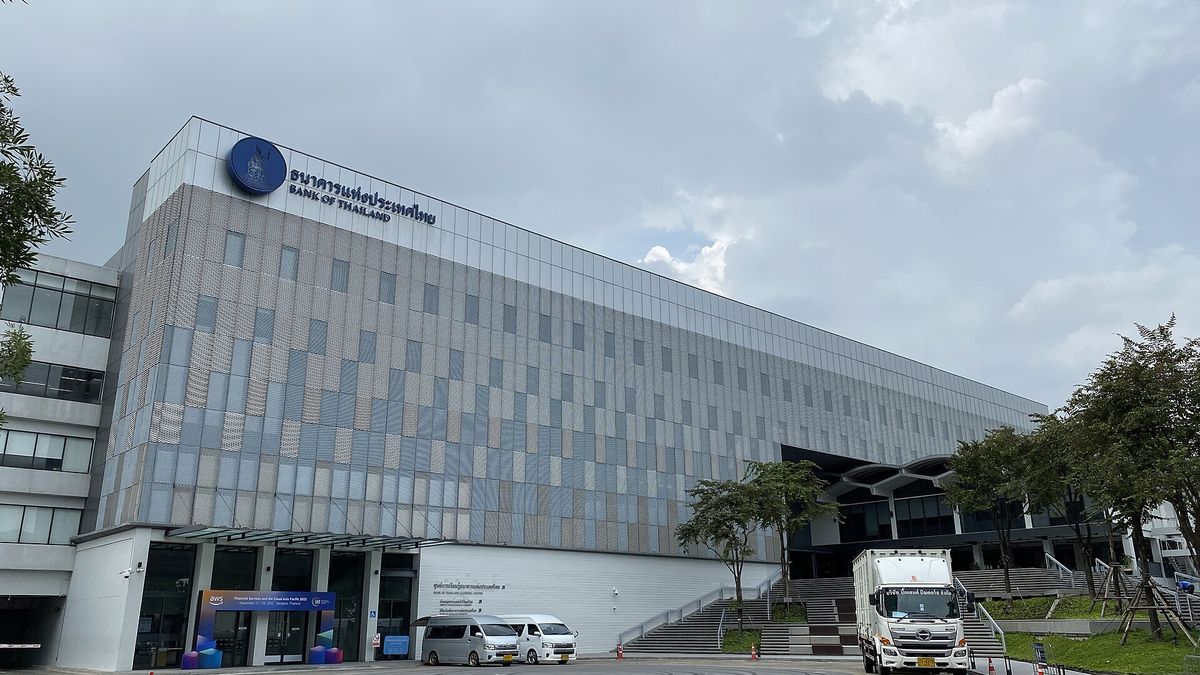
The Bank of Thailand held its policy rate at 1% on Wednesday for a fourth consecutive meeting and sharply raised its export forecast, saying shipments tied to the artificial intelligence boom are lifting growth even as households and small businesses fall behind.
The central bank now expects exports to rise 22% this year, up from the 14% it projected in June, and lifted its 2026 growth forecast to 2.4%, Reuters reported. The decision keeps Thailand out of the tightening wave that has swept Asia's central banks this year. Many central banks, including the Philippines', have raised rates in response to inflation linked to the war in the Middle East, while Thailand has not moved since the conflict began, according to Reuters.
The Monetary Policy Committee voted unanimously to keep the one-day repurchase rate unchanged, with one member absent, the bank said in a statement. All 26 economists in a Reuters poll had forecast a hold, and the baht was largely unchanged after the announcement.
The committee cut rates six times between October 2024 and February 2026, by a combined 150 basis points, to support an economy held back by weak domestic demand and heavy household debt, the Bangkok Post reported. It also left the rate at 1% at its June 24 and Aug. 26 meetings, according to The Nation.
Bank of Thailand Lifts Export and Growth Forecasts
The committee now projects gross domestic product growth of 2.4% in 2026 and 2.1% in 2027, compared with June forecasts of 2.3% and 1.8%, Reuters reported. The bank credited stronger-than-expected merchandise exports and private investment linked to the technology and AI cycle.
The export revision is the largest change. This year's 22% forecast compares with 17% to 18% projected earlier in October. For 2027 the bank sees exports growing 15%, against 4.6% in its June outlook, according to Reuters.
The bank was blunt about who gains. Its statement said growth “remains below potential and the benefits remain concentrated,” with most of the lift going to companies and workers in related manufacturing and service industries. Household debt, a fragile job market and weak purchasing power continue to restrain consumer spending, and lower-income families face the heaviest cost-of-living strain, the bank said.
Tourism, the other main engine, is softening. The bank expects 32 million foreign visitors this year and 34.5 million in 2027, a million fewer in each year than it forecast before, Reuters reported. The 2026 figure compares with 33 million visitors last year, according to the bank's briefing slides, and the statement linked the expected decline to higher oil prices.
Recent data show why the upgrade matters. The economy grew 1.9% from a year earlier in the second quarter, down from 2.8% in the first, after expanding 2.4% in 2025, a pace that trailed regional peers, according to Reuters. Governor Vitai Ratanakorn said on Oct. 12 he was confident growth would reach 2.3% this year on strong exports and a surge in foreign direct investment, the Bangkok Post reported. The International Monetary Fund has raised its 2026 forecast for Thailand to 2.1% from 1.9%, the newspaper said.
Inflation, Credit and the Baht
The central bank trimmed its inflation forecasts. Headline inflation is now seen averaging 2.1% this year, compared with 2.2% projected earlier this month, Reuters reported, and 2.8% in the June forecast, according to the bank's briefing slides. The 2027 forecast fell to 1.3% from 1.4% in June. Core inflation is forecast at 1.2% this year and 1.3% next year, down from 1.5% and 1.4% in June.
The bank still expects prices to climb through the rest of 2026 and into early 2027 as energy costs and the El Niño weather pattern feed through, before falling back on base effects and weak demand. It named the Middle East conflict, limited room to keep subsidizing energy prices and companies passing higher costs on to customers as upside risks.
Credit has picked up, but unevenly. Loan growth is coming mainly from large companies borrowing for working capital and higher operating costs, with some funding a new wave of investment, the bank said. Lending to small and midsize enterprises is still shrinking in most sectors as lenders avoid riskier borrowers, and the committee said the repayment capacity of those firms and of vulnerable households needs close watching.
The baht has weakened against the dollar as traders priced in a tighter path for U.S. interest rates and oil prices kept rising, the bank said. Thai government bond yields have edged higher in line with global markets, while borrowing costs on private loans, the main source of funding for Thai companies, have held steady.
A Hint of Higher Rates
The clearest word on future policy came at the post-meeting briefing. Assistant Governor Don Nakornthab, who also serves as the committee's secretary, said the committee sees low rates as having long-term effects. “If the economy is strong enough, rates can gradually rise to maintain policy space,” he said, according to Reuters.
The statement carried a similar note. It said the committee will keep watching how low interest rates affect long-term macro-financial stability, while judging the current rate appropriate to support the recovery. Deputy Governor Piti Disyatat said in an interview earlier this month that policy would stay accommodative for now and would normalize only once the economy was ready, Reuters reported.
Economists do not expect a move soon. Most of those polled by Reuters see the rate staying at 1% through the end of 2027. The committee's next decision is due Dec. 23.
Sources
- Bank of Thailand: Monetary Policy Committee's Decision 5/2026 (Oct. 28, 2026)
- Reuters (via 101 WIXX): Thai central bank keeps interest rate unchanged, as expected (Oct. 28, 2026)
- Bangkok Post: Bank of Thailand keeps interest rate unchanged (Oct. 28, 2026)
- The Nation (Thailand): Bank of Thailand holds policy rate at 1.00% on October 28 (Oct. 28, 2026)
- Bank of Thailand: Press Conference: Monetary Policy Committee Decision 5/2026 (slides) (Oct. 28, 2026)
Our standards: Capital Times reports under the principles set out in our Editorial Standards and Ethics Policy. Spotted an error? Report it to our editors.