StarHub to Merge With Keppel's M1 in All-Share Deal, Cutting Singapore to Three Networks
StarHub will issue about 651.7 million new shares for M1, handing Keppel a 23% stake and promising S$110 million a year in cost savings by 2030.
What to know
- StarHub will issue about 651.7 million new shares, or 27.4% of its enlarged capital, to M1's shareholders, giving Keppel an effective 23% stake.
- The companies expect annual cost savings of S$110 million by 2030, and the deal needs approval from regulators and both companies' shareholders.
- Completion is targeted for the first half of 2027, alongside StarHub's purchase of the Singapore business of Circles.Life.
SINGAPORE
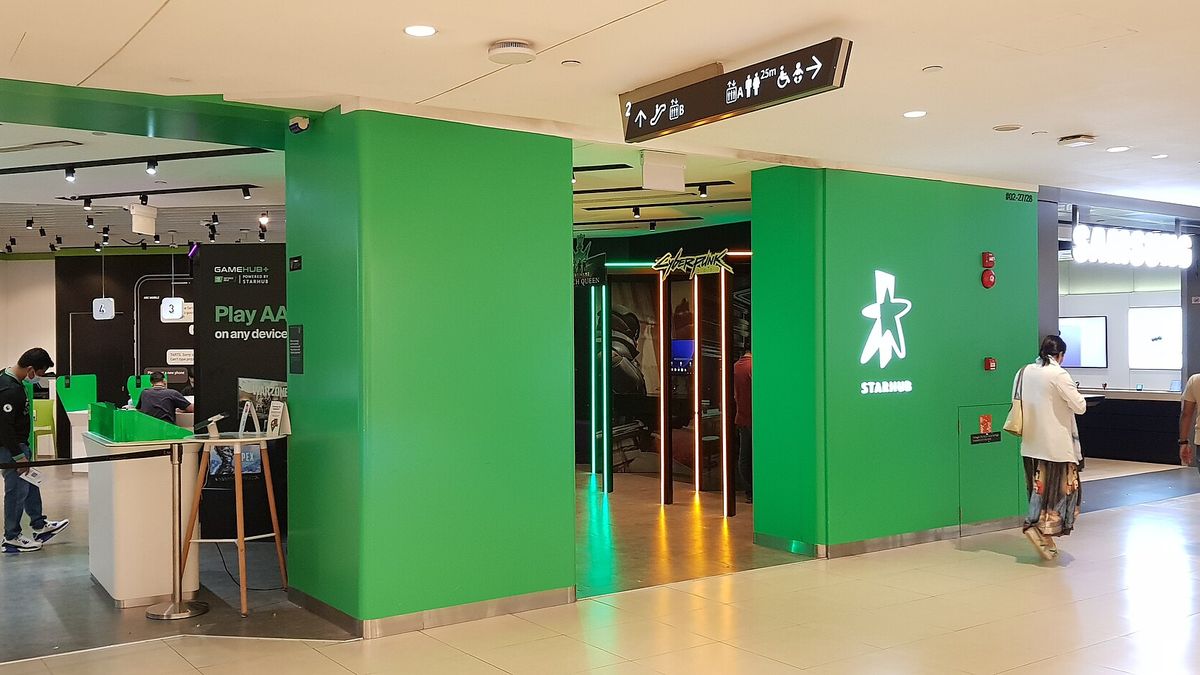
StarHub has agreed to combine with M1, the mobile operator controlled by Keppel, in an all-share deal that would cut the number of mobile network operators in Singapore from four to three, The Business Times reported, and make the conglomerate one of StarHub's largest shareholders.
StarHub will issue about 651.7 million new shares to M1's shareholders, equal to roughly 27.4% of its enlarged share capital, according to a joint statement from StarHub and Keppel on Tuesday. Keppel, through its interest in M1, would end up with an effective 23% of the combined group. M1's other shareholders would hold the remaining 4.4%.
The Business Times put the value of the deal at S$1.1 billion. The companies' own statement gave a higher figure: at a pro forma price of S$1.50 per StarHub share, which includes the estimated value of cost savings, the new shares imply an enterprise value of S$1.36 billion for M1. StarHub shares had closed at S$1.01 on Monday, before the announcement. M1 will come into the merged group carrying S$380 million of net debt, including other adjustments.
The combined business would serve 4.1 million customers and would have had revenue of about S$2.6 billion and earnings before interest, taxes, depreciation and amortization (EBITDA) of about S$0.5 billion in the 12 months to June, the statement said. Its net debt would be 2.9 times EBITDA.
Savings, and a second chance after Simba
The companies are promising cost savings of S$110 million a year by 2030 across network, infrastructure, commercial and IT functions, with a net present value they estimate at S$1.1 billion. They also plan to take full control of Antina, their existing network joint venture, to help merge spectrum and networks.
StarHub chief executive Nikhil Eapen described the tie-up as the moment “two challengers become a builder of Singapore's digital future.” The pitch rests on scale. Singtel held about 43% of the mobile market as of June, against about 22% for M1, 21% for StarHub and 14% for Simba, according to Bloomberg Intelligence figures cited by The Business Times.
The deal follows a failed attempt by Keppel to sell M1. A proposed S$1.4 billion cash sale to Simba fell apart in May after the Infocomm Media Development Authority (IMDA) suspended its review while it investigated Simba's unauthorized use of spectrum, The Business Times reported. Simba admitted the breach on Nov. 17, and the regulator is still reviewing its reply to a show cause notice.
The S$1.1 billion price is below Simba's original offer and in line with analyst estimates from September, according to the newspaper. Macquarie Capital's Foo Zhiwei estimated M1's enterprise value at S$1.16 billion to S$1.25 billion, and Bloomberg Intelligence's Chris Muckensturm at S$1.1 billion to S$1.2 billion. Analysts pointed to weaker consumer revenue amid price competition and the move of MyRepublic's 4G wholesale business from M1 to StarHub.
Why Keppel took shares instead of cash
For Keppel, the trade swaps a subsidiary that adds little to profit for a stream of dividends. Chief executive Loh Chin Hua said the StarHub stake would pay about S$33 million a year in cash dividends, compared with the S$3 million M1 now adds to group profit, The Business Times reported on Thursday. He said StarHub was the only realistic merger partner left after the Simba deal collapsed, and called the arrangement “a very good trade for Keppel.”
The deal also takes S$324 million of debt off Keppel's books, which feeds the pool it has set aside for special dividends, and frees it from funding M1's network, spectrum and cybersecurity spending. The deal fits Keppel's plan to become asset-light and sell non-core holdings by 2030, a push that helped its core profit rise more than 20% in the first nine months of the year.
Some analysts and investors who have been selling Keppel shares see the all-share structure as a sticking point, according to The Business Times. Keppel will keep the StarHub stake for at least 12 months after completion, and any later disposal would be measured and orderly, the companies' statement said. Loh said options then include gradual sales, a sale to a strategic or fund investor, or distributing the shares to Keppel's own shareholders.
What happens next
The merger needs approval from the IMDA and the Ministry of Digital Development and Information, as well as votes at separate extraordinary general meetings of StarHub and Keppel. Asia Mobile Holdings, StarHub's controlling shareholder, will abstain from StarHub's vote, and Temasek, Keppel's controlling shareholder, will abstain from Keppel's. The companies expect to complete the deal in the first half of 2027 and will keep competing independently until then. Customers keep their current plans.
StarHub is also adding a third brand. It said it had exercised an option to buy the Singapore operations of Circles.Life, including its local subscribers, staff and brand, with completion expected alongside the M1 deal, IT Brief Asia reported. No price was disclosed. StarHub has also picked Circles' operating software to run some consumer mobile services.
The open question for regulators is pricing. With three networks instead of four, the IMDA's review will test whether enough competition remains once M1, StarHub and Circles.Life sit under one roof, with Singtel and Simba as the other network operators.
Sources
- StarHub: StarHub and M1 to Combine, Creating a Stronger Connectivity and Digital Services Group in Singapore (Nov. 24, 2026)
- The Business Times (via Singapore Law Watch): StarHub merges with M1 for S$1.1 billion; acquires Circles Life Singapore (Nov. 24, 2026)
- Mothership: StarHub to merge with M1 by 1st half of 2027; acquire Circles Life S'pore (Nov. 24, 2026)
- The Business Times (via Longbridge): Starhub-M1 merger: S$33 million StarHub dividend beats M1's S$3 million profit contribution: Keppel (Nov. 26, 2026)
- IT Brief Asia: StarHub to buy Circles.Life Singapore in M1 tie-up (Nov. 26, 2026)
Our standards: Capital Times reports under the principles set out in our Editorial Standards and Ethics Policy. Spotted an error? Report it to our editors.