Golden Agri-Resources Third-Quarter Profit Rises 32% From Second Quarter to US$162 Million
The Singapore-listed palm oil group said quarterly profit rose 32% from the second quarter as plantation output rebounded, nine-month net profit rose 16% on higher crude palm oil prices, and warned that El Nino will weigh on 2027 yields.
What to know
- Golden Agri-Resources said third-quarter net profit rose 32% from the second quarter to US$162 million, with EBITDA up 32% to US$414 million.
- Nine-month net profit rose 16% to US$330 million on revenue of more than US$10 billion, as the average crude palm oil price rose to US$1,192 a tonne from US$1,094.
- The company said El Nino conditions are expected to hurt palm yields in 2027 and that the prolonged drought has delayed replanting.
SINGAPORE
Golden Agri-Resources said its net profit rose 32% in the third quarter from the second to US$162 million, as fresh fruit output from its Indonesian estates recovered and crude palm oil prices stayed higher than a year earlier.
The Singapore-listed palm oil group reported the figures on Thursday, Nov. 12. For investors in Asia, the result is a read on how far firm palm oil prices can offset weather risk at a time when Indonesian growers face drought, haze scrutiny and an El Nino forecast that the company itself now flags as a threat to next year's harvest.
Earnings before interest, tax, depreciation and amortization (EBITDA) also rose 32% from the second quarter, to US$414 million, the company said in a statement. It attributed the quarter-on-quarter gain mainly to higher plantation output and investment income received. The statement compared the third quarter only with the second quarter and did not give a year-on-year figure for the three months.
Golden Agri-Resources nine-month profit rises 16%
For the first nine months of 2026, revenue exceeded US$10 billion, the company said. Net profit after income tax rose 16% from a year earlier to US$330 million, and nine-month EBITDA increased 10% to US$970 million.
Prices did most of the work. The average free-on-board price of Indonesian crude palm oil was US$1,192 a tonne between January and September, compared with US$1,094 a tonne in the same period of 2025, according to the statement. Sales volumes held steady, which the company credited to its integrated model, running from estates and mills to refining and shipping.
Currency moves also helped at the bottom line. The group booked foreign exchange gains of US$13 million in the nine months, against a loss of US$15 million a year earlier, and interest costs were slightly lower, it said.
The downstream business, which refines and sells palm products to customers worldwide, kept its sales volume at about 8.7 million tonnes for the nine months. The company said it is widening its customer base and adding higher-value products, without giving segment profit figures in the statement.
Output recovers, but drought delays replanting
The third-quarter rebound came largely from the estates. Fresh fruit bunch production recovered strongly in the quarter, lifting nine-month volume by 2% even as some land was being prepared for replanting, the company said. Better oil extraction rates and larger purchases of fruit from third-party growers pushed palm product output up 7% to 2.1 million tonnes.
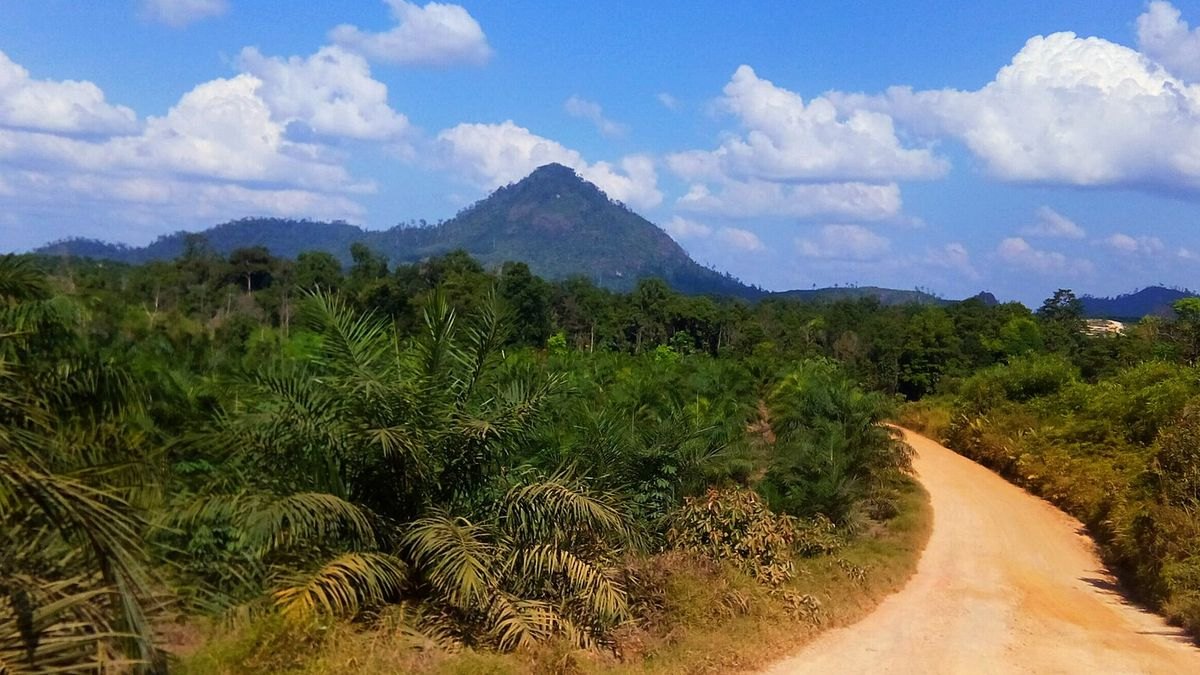
At Sept. 30, the group's planted area was about 525,000 hectares, of which 480,000 hectares were mature. Nucleus estates, which the company runs directly, covered 409,000 hectares, and plasma estates, run with smallholders, covered 116,000 hectares.
Replanting is the long-term issue for the industry. Golden Agri said ageing trees in Indonesia and Malaysia remain the main constraint on production growth, and the prolonged drought has temporarily pushed back its own replanting plans.
The dry season has also brought regulatory attention. Singapore Exchange Regulation sent queries on Oct. 16 to listed agribusinesses over forest fires in Indonesia, and Golden Agri replied that it had a no-burning policy and was not aware of information showing its operations had contributed to the haze, The Star reported, citing The Straits Times. Golden Agri shares fell 3.5% that day. The regulator later sent a second round of questions to listed planters, as Capital Times reported. The results statement did not refer to the haze.
El Nino and energy prices set the outlook
The company's outlook pointed in two directions. On demand, it said near-term palm oil consumption is being shaped mainly by geopolitical tensions that are lifting energy prices and disrupting shipping, and by the supply of rival vegetable oils. Firm crude oil prices keep palm-based biodiesel competitive, and higher blending mandates are sustaining demand, according to the statement.
On supply, Golden Agri said current El Nino conditions are expected to hit yields in 2027. That puts a weather risk on next year's volumes even as this year's output recovers.
Taken together, the company said these conditions should support prices for palm oil and other vegetable oils. It warned that volatility could persist in the near term, driven by weather, geopolitical developments, shifts in trade policy and energy markets.
For shareholders, that combination means the price tailwind that lifted nine-month earnings may continue into 2027, while the volume side becomes harder to grow. The company's statement gave no figure for expected 2027 production and did not address dividends.
The next marker is Indonesia's monthly palm oil production and export data, which will show whether the third-quarter recovery in fruit output held into the fourth quarter. Golden Agri's full-year results will show whether the second-half rebound was enough to lift annual profit above 2025.
Sources
- Golden Agri-Resources: Golden Agri-Resources Financial Performance Sustains Momentum Amid Global Volatility (Nov. 12, 2026)
- The Star (The Straits Times/ANN): Palm oil stocks tumble as S'pore probes haze links (Oct. 19, 2026)
Our standards: Capital Times reports under the principles set out in our Editorial Standards and Ethics Policy. Spotted an error? Report it to our editors.