Changi Air Cargo Jumps 9.7% in September as Singapore Sea Cargo Falls 2.4%
AI chip shipments are pushing record tonnages through Singapore's airport while bulk cargo at the port shrinks and ship fuel sales end a four-month run of gains.
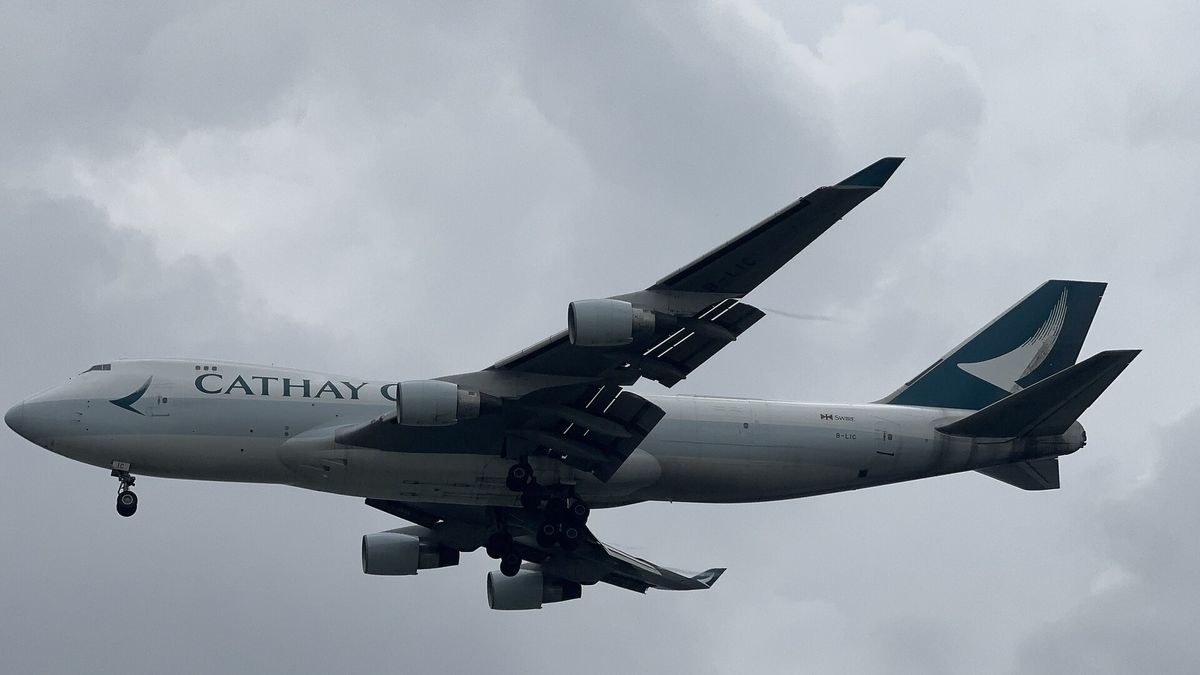
What to know
- Changi Airport handled 191,256 tonnes of air cargo in September, up 9.7% from a year earlier, with exports up 11.4%, government data showed.
- Cargo handled at Singapore's seaport fell 2.4% to 50.2 million tonnes in September, as bulk cargo dropped 8.8% while general cargo rose 1.3%.
- Singapore's conventional and biofuel bunker sales slipped 0.9% year on year to 4.67 million tonnes in September, ending a four-month growth streak, Ship & Bunker reported.
SINGAPORE
Changi Airport handled 191,256 tonnes of air cargo in September, 9.7% more than a year earlier, according to monthly figures published by Singapore's Department of Statistics on Oct. 30. Over the same month, cargo moved through Singapore's seaport fell 2.4% to about 50.2 million tonnes, and sales of ship fuel slipped for the first time since April.
The split matters for investors tracking Singapore's trade engine. Air freight carries the high-value, light goods that the artificial intelligence boom runs on: chips, servers and electronic parts. Sea cargo, especially bulk, tracks oil, commodities and heavier industry. In September the first group kept growing fast while the second shrank, a pattern that also shows up in Singapore's factory data, where electronics output has carried the sector.
Changi air cargo near a record
September's tonnage was the third-highest monthly figure in the statistics office's series, behind July 2026, when Changi handled 192,596 tonnes, and November 2017. Exports drove the gain. Outbound air cargo rose 11.4% from a year earlier to 88,661 tonnes, while imports climbed 8.3% to 102,596 tonnes.
For the first nine months, Changi's air cargo totaled about 1.66 million tonnes, up 8.5% from the same period of 2025, by Capital Times' calculation from the official tables.
Changi Airport Group said on Oct. 19 that the airport handled 574,000 tonnes of airfreight in the third quarter, up 8%, according to CAPA - Centre for Aviation. The operator credited demand on both export and import flows, in particular shipments of AI-related semiconductors and electronics. China, the United States, Australia, Hong Kong and India were its largest cargo markets. The quarter followed a 9.8% rise in the April to June period, when Changi moved 567,000 tonnes, Cargo Newswire reported in July.
Lim Ching Kiat, the group's executive vice president for air hub and cargo development, said air travel demand had stayed resilient even as airlines face elevated fuel costs, CAPA reported.
Passenger traffic grew far more slowly. Changi handled about 5.54 million passengers in September, up 1.2% from a year earlier, the statistics office data showed.
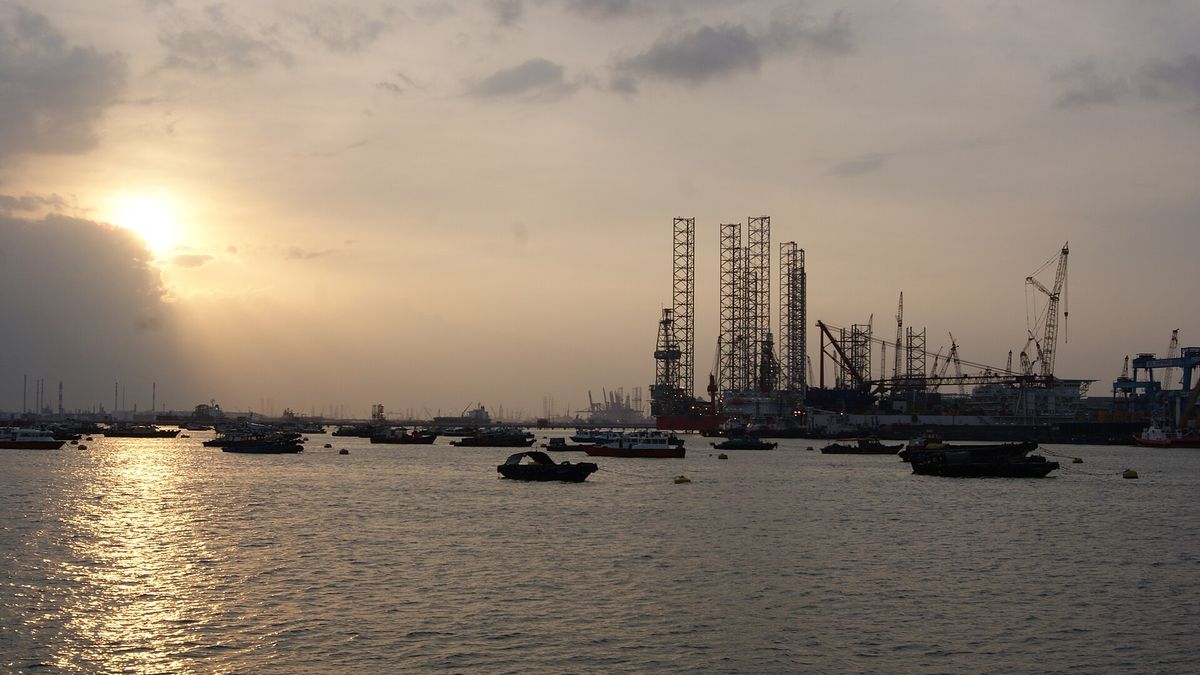
Port of Singapore: more ships, less bulk
The seaport picture was mixed. Vessel arrivals rose 5.6% to 11,608 in September, and arrival tonnage climbed 4.4% to about 277 million gross tons, figures from the Maritime and Port Authority of Singapore (MPA) published through the statistics office showed.
Cargo volumes did not keep pace. General cargo, the category that includes containers, rose 1.3% from a year earlier to 33.2 million tonnes. Bulk cargo fell 8.8% to 17 million tonnes. From August, total cargo dropped 2.5%.
Over January to September, total sea cargo was up 1.1% at about 464.5 million tonnes, held up by a 2.9% gain in general cargo that offset a 2.3% decline in bulk. Air cargo grew about eight times as fast over the same stretch.
The port is coming off a record 2025, when it handled 44.66 million twenty-foot equivalent units of containers and arrivals reached 3.22 billion gross tons, according to the MPA annual report cited by PortNews.
Bunker sales end a four-month climb
Singapore, the world's largest ship refueling hub, sold 4.67 million tonnes of conventional and biofuel bunkers in September, down 0.8% from August and 0.9% from a year earlier, according to Ship & Bunker's analysis of MPA data released Oct. 14. That broke a run of monthly gains that started in May.
The year is still ahead of 2025, which set full-year and nine-month records. Sales in the first nine months reached 41.97 million tonnes, up 1.8%. Ship & Bunker said demand picked up after the Iran war began in late February.
The fuel mix has shifted toward high-sulfur fuel oil, used by ships fitted with exhaust scrubbers. Its sales rose 10.4% to 17.58 million tonnes in the nine months and made up 41.9% of conventional and biofuel volumes, against 38.6% a year earlier. Very low sulfur fuel oil fell 2% to 20.63 million tonnes.
Cleaner fuels moved in opposite directions. Biofuel blend sales nearly halved to 598,300 tonnes over the nine months, while liquefied natural gas bunker sales rose 21.4% to 487,100 tonnes.
Prices have also climbed. The average Singapore price for very low sulfur fuel oil was $870 a tonne in September, according to Ship & Bunker, up from $822.50 in August and $491 a year earlier. Bunker calls rose 2.8% from a year earlier to 3,617, but the average delivery shrank to about 1,292 tonnes.
The MPA's October port figures, including container throughput and bunker sales, are due in mid-November. Changi's October air cargo tally will follow at the end of the month; the airport has handled more than 190,000 tonnes in each of the past three months.
Sources
- Singapore Department of Statistics: Civil Aircraft Arrivals And Departures, Passengers, Air Cargo Tonnage And Mail - Changi Airport, Monthly (M650031) (Oct. 30, 2026)
- Singapore Department of Statistics / Maritime and Port Authority of Singapore: Sea Cargo And Shipping Statistics, Monthly (M651101) (Oct. 15, 2026)
- Ship & Bunker: ANALYSIS: Singapore Bunker Sales Exceed Last Year's Nine-Month Record (Oct. 15, 2026)
- CAPA - Centre for Aviation: Singapore Changi Airport reports resilient air travel demand in 3Q2026 (Oct. 20, 2026)
- Cargo Newswire: Changi Airport Accelerates Cargo Growth with Nearly 10% Rise in Q2 Airfreight Volumes (July 27, 2026)
- PortNews: MPA annual report shows Singapore port handled 44.66m TEU in 2025 (July 2, 2026)
Our standards: Capital Times reports under the principles set out in our Editorial Standards and Ethics Policy. Spotted an error? Report it to our editors.