Japan Factory Output Jumps 2.2% in September as Retail Sales Fall for a Second Month
Carmakers drove the rebound and manufacturers expect a 5.1% gain in October, while shoppers pulled back and Tokyo's underlying inflation cooled.
What to know
- Japan's industrial output rose 2.2% in September from August, above the 1.3% median forecast in a Reuters poll.
- Retail sales fell 0.7% on the month, and annual growth slowed to 2.3% against expectations of 3.3%.
- Tokyo's October CPI excluding fresh food and energy rose 2.4%, down from 2.7% in September.
TOKYO
Japan's factories rebounded sharply in September, with industrial output rising 2.2% from August on a recovery in car production, according to preliminary data from the Ministry of Economy, Trade and Industry released Friday. The gain beat the 1.3% median forecast in a Reuters poll, as reported by investingLive, and followed a 2.4% drop in August.
The same morning brought a weaker read on consumers. Retail sales fell for a second straight month, and a closely watched measure of Tokyo's underlying inflation slowed more than expected. For investors in Asia, the mix matters because it shapes how fast the Bank of Japan raises rates, and therefore where the yen trades against regional currencies. The central bank held its policy rate at 1.25% the same week.
Carmakers Lead Japan's Industrial Production Rebound
The September increase was the first in three months, Xinhua reported, and lifted the seasonally adjusted production index to 104.1 (2020 = 100). Eight of the industries METI tracks grew and seven shrank.
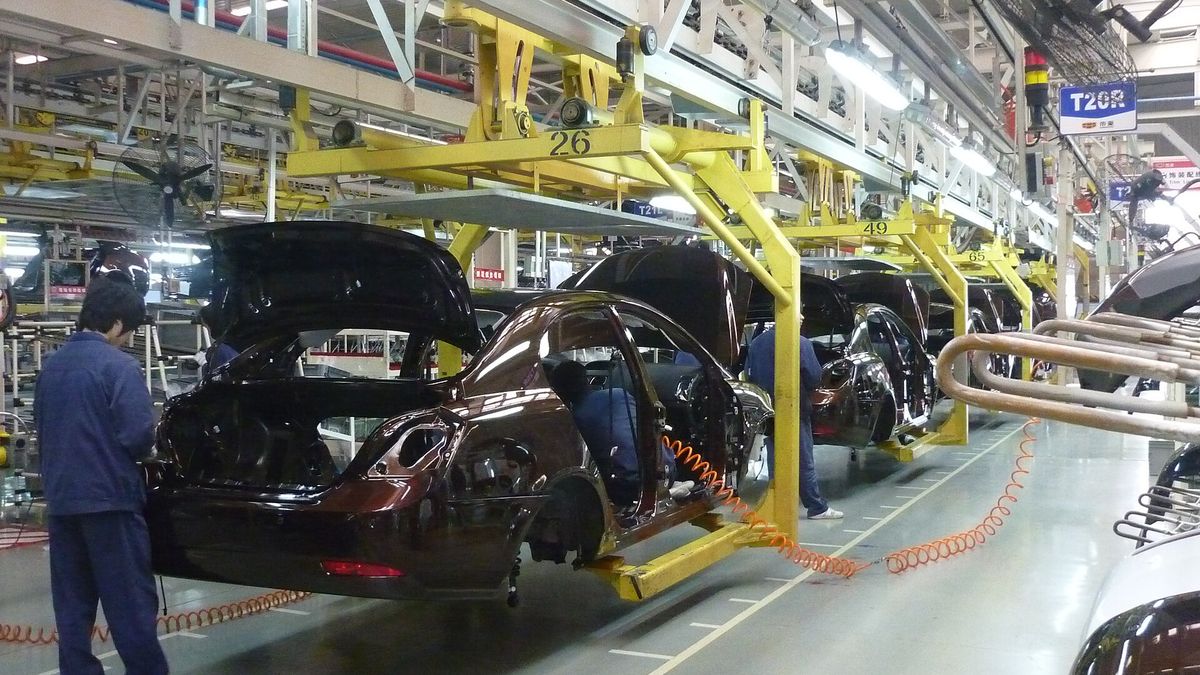
Motor vehicles did most of the work. Output in the sector rose 5.5% after falling 6.8% in August, according to Trading Economics. Production machinery climbed 3.4%, and general-purpose and business-oriented machinery gained 4.8%. On the other side, iron, steel and nonferrous metals fell 1.6%, ceramics, stone and clay products slipped 1.9%, and a chemicals category declined 1.0%.
Compared with a year earlier, output grew 1.9%, slower than August's 2.7%. Shipments rose 0.6% on the month, while inventories rose 2.5%. Trading Economics said the monthly gain was the fastest since January.
The rebound comes off a low base. August's decline was revised to 2.4% from a first estimate of 1.7%, making it the second monthly contraction in a row after a 0.2% dip in July, according to Trading Economics. Part of September's jump simply recovers ground lost over the summer.
The forward-looking part of the release was stronger still. Manufacturers surveyed by METI expect output to rise 5.1% in October, up from the 3.1% they projected a month earlier, and a further 0.8% in November. METI is scheduled to publish revised September figures on Nov. 16, according to Trading Economics.
Retail Sales Miss Forecasts as Jobs Market Firms
Consumers told a different story. Retail sales fell 0.7% in September from August, according to investingLive, after a decline that Trading Economics now puts at 0.9% following revisions. From a year earlier, sales rose 2.3%, short of the 3.3% consensus and the slowest pace in three months.
Car buyers were the main exception. Sales of motor vehicles rose 15.6% from a year earlier, by Trading Economics' breakdown, while department stores gained 2.7% and food and beverages 1.4%. Machinery and equipment sales fell 5.7%, fuel fell 3.0% and pharmaceuticals and cosmetics slipped 0.2%.
The labor market offered some support for spending. Japan's unemployment rate fell to 2.4% in September from 2.5% in August, below market expectations, Trading Economics reported. Employment stood at 68.68 million, up 340,000, while the number of unemployed fell by 100,000 to 1.67 million. The ratio of job openings to applicants edged up to 1.19 from 1.18, slightly above the consensus of 1.18.
Tokyo CPI Shows Underlying Price Pressure Easing
Tokyo's consumer prices, an early guide to the national figures, sent a mixed signal for October. Headline inflation in the capital rose to 2.8% from 2.7%, a touch above the 2.7% forecast, according to investingLive. Core prices, which exclude fresh food, rose 2.6%, in line with expectations and down from 2.7%.
The surprise came in the narrower gauge that also strips out energy. It slowed to 2.4% from 2.7%, well short of the 2.7% economists had expected. That measure is the one most often cited as a read on demand-driven inflation, and a sharp drop in it weakens the argument that domestic price pressure is building on its own.
Taken together, the week's data give each side of the rate debate something to work with. Stronger factories, a tighter jobs market and a forecast 5.1% jump in October output point to an economy that can absorb higher borrowing costs. Two months of falling retail sales and softer core-core inflation in Tokyo point the other way.
The next tests arrive quickly. METI's revised industrial production figures are due Nov. 16, and the nationwide CPI for October, which will show whether Tokyo's cooling in underlying inflation is shared across the country, follows later in November.
Sources
- Xinhua: Japan's industrial output rises 2.2 pct in September (Oct. 30, 2026)
- investingLive: Japan September factory output beats forecasts, but retail sales disappoint ahead of BoJ (Oct. 30, 2026)
- Trading Economics: Japan Industrial Output Rebounds More than Expected (Oct. 30, 2026)
- Trading Economics: Japan Retail Sales Growth Eases to 3-Month Low (Oct. 30, 2026)
- Trading Economics: Japan Industrial Production MoM (Oct. 30, 2026)
- Trading Economics: Japan Retail Sales YoY (Oct. 30, 2026)
- Trading Economics: Japan Jobless Rate Unexpectedly Eases (Oct. 29, 2026)
- Trading Economics: Japan Jobs to Applications Ratio (Oct. 29, 2026)
- investingLive: Tokyo October CPI 2.8% (2.7% expected) (Oct. 29, 2026)
Our standards: Capital Times reports under the principles set out in our Editorial Standards and Ethics Policy. Spotted an error? Report it to our editors.