South Korea Says No Plan to Lift Pension Age to 68 as Retirement Age Talks Near Decision
The National Pension still starts at 63 and is set to reach 65 by 2033, while the legal retirement age stays at 60, leaving a gap savers must bridge.
What to know
- Health and Welfare Minister Jeong Eun-kyeong said claims that the National Pension will start at 68 are untrue and that no change to the eligibility age is under review, SBS reported on Nov. 26.
- The pension age is 63 today and is scheduled to rise to 64 in 2028 and 65 in 2033, while the statutory retirement age remains 60.
- A ruling-party proposal under discussion would raise the retirement age to 65 in stages from 2029 to 2039, and the labor minister has said the government may present its own plan.
SEOUL
South Korea's health and welfare minister has dismissed claims that the National Pension will soon start paying out only at age 68, saying the government is not reviewing any change to the eligibility age, SBS News reported on Nov. 26.
Minister Jeong Eun-kyeong addressed the rumors on social media after YouTube and other platforms filled with posts saying the start age was about to rise. The denial matters to millions of workers who are trying to plan for the years between leaving their jobs and drawing a pension, a gap that will reach about five years for people born in 1969 or later and that a separate debate over the retirement age could shrink.
Where the 68 figure came from
The claim traces back to a policy seminar on structural pension reform held at the National Assembly on Sept. 28. There, Yonsei University public administration professor Yang Jae-jin proposed raising the full pension age in steps to 68 by 2046, according to an Oct. 2 report in the Segye Ilbo newspaper.
Segye noted that the idea was a research proposal, not policy: no agreement exists between the government and the Assembly, and no law has been amended. Yang's plan paired the higher age with government funding for the pension fund, including an upfront injection of 100 trillion won over two years in the 68 scenario. Under one of his scenarios, keeping the age at 65 would require state support of about 0.6% of gross domestic product a year, or roughly 18 trillion won.
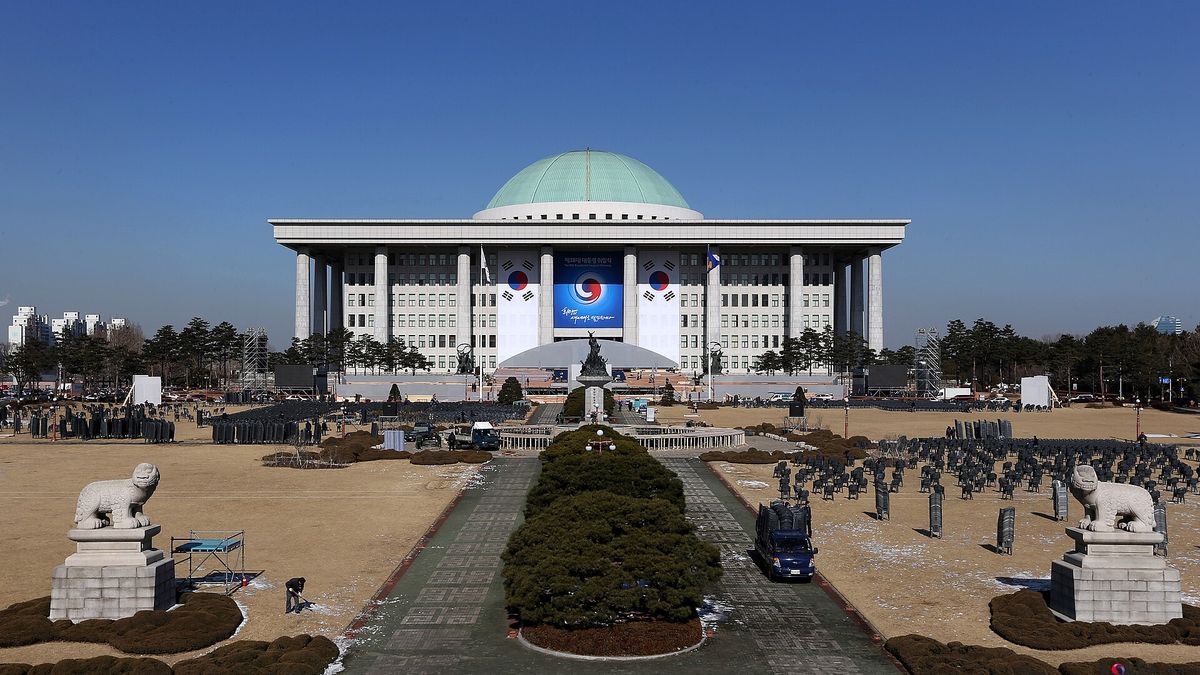
The National Assembly's special committee on pension reform, whose chairman, Yoon Young-seok, hosted the seminar, is set to end its term at the end of this year without a bipartisan agreement, SBS reported.
The schedule that actually applies
Under current law the pension age is 63. It is scheduled to rise to 64 in 2028 and to 65 in 2033, SBS said. Segye put the full benefit age at 65 for people born in 1969 or later.
Contributions are also climbing. Under the reform the Assembly passed on March 20, 2025, which took effect on Jan. 1, 2026, the contribution rate began rising by 0.5 percentage point a year and will reach 13% of pay in 2033, with employers and employees each paying half, according to a summary by the U.S. Social Security Administration. The same law lifted the target income replacement rate to 43% from 41.5% for a worker with 40 years of contributions.
That 43% figure assumes a full working life of payments. National Pension Service Chairman Kim Sung-joo told the Seoul Economic Daily in an interview published on Nov. 23 that with a shorter contribution record, the replacement rate works out to about 30%. Kim also argued that eligibility for the separate, tax-funded basic pension should be tied to median income rather than fixed at the poorest 70% of seniors, and that payments for poorer retirees should rise from 350,000 won a month to between 400,000 and 500,000 won. The ministry's plan for next year keeps the 70% threshold, the newspaper said.
The income gap and the retirement age debate
The bigger issue for savers is the mismatch between work and pension. Korea's statutory retirement age is 60, so a worker born in 1969 or later who retires on schedule faces a gap of about five years before the full National Pension begins, Segye calculated. Raising the pension age to 68 would have stretched that wait to about eight years. Segye noted the gap need not be income-free: re-employment or other pensions can fill it, and workers can claim the National Pension up to five years early, at a cut of 6% for each year, or as much as 30%.
Kim Yeon-myung, a professor emeritus at Chung-Ang University, told SBS that any later pension age would create a "serious income cliff problem" and must be discussed together with a longer retirement age.
That discussion is moving. Employment and Labor Minister Kim Young-hoon said on KBS television on Nov. 22 that the government may put forward its own plan if the Democratic Party's special committee on extending the retirement age fails to reach an agreement, the Seoul Economic Daily reported. He named the period after the committee's Nov. 27 meeting as the point to decide. A proposal under discussion in the ruling party would lift the statutory retirement age to 65 in stages from 2029 to 2039, alongside re-employment. Unions want legislation this year and oppose re-employment and across-the-board pay cuts, while business groups prefer re-employment and warn of higher labor costs and fewer jobs for young people.
What savers can do now
For workers in their 50s, the practical point is that the pension start date has not changed: it is due to rise to 64 in 2028 and 65 in 2033, not 68. Planning should cover at least the years from 60 to the pension age, using severance and workplace retirement pension accounts, personal pension savings or continued work.
Many Koreans still take those workplace savings as a lump sum, as Capital Times reported in its look at the 501 trillion won retirement pension market, which can leave little to cover the bridge years. Readers can also follow how the National Pension fund itself has performed this year.
What to watch: whether the government tables its own retirement age bill after the Nov. 27 party meeting, and whether lawmakers revive the pension age question once the special committee's term ends.
This article is general information, not financial advice.
Sources
- SBS News: National Pension Delayed to Age 68? Minister Steps Forward to Clarify (Nov. 26, 2026)
- Segye Ilbo: 60세 은퇴 뒤 연금까지 8년 기다리나…국민연금 68세 수급안 따져보니 (Oct. 2, 2026)
- Seoul Economic Daily: Labor Minister Warns Government Will Draft Own Retirement Age Plan (Nov. 22, 2026)
- Seoul Economic Daily: Tie Basic Pension to Median Income, Pension Chief Says (Nov. 23, 2026)
- Seoul Economic Daily: 노동장관 "정년연장 합의 불발땐 정부안 내겠다" (Korean original) (Nov. 22, 2026)
- Seoul Economic Daily: "기초연금 기준중위소득에 연동…빈곤층 지원액 50만원까지 늘려야" (Korean original) (Nov. 23, 2026)
- U.S. Social Security Administration: South Korea Approves Social Insurance Pension Reforms (International Update, April 2025) (April 1, 2025)
Our standards: Capital Times reports under the principles set out in our Editorial Standards and Ethics Policy. Spotted an error? Report it to our editors.