How Bond ETFs Work: Duration, Yield and Currency, With Asia's ABF Funds as Worked Examples
A 2.32% yield and an 8.64-year duration tell a Singapore bond ETF holder more about the next year than past returns do. Here is how to read them.

What to know
- The ABF Singapore Bond Index Fund had a weighted average duration of 8.64 years and a yield to maturity of 2.32% at Oct. 31, its manager Amova Asset Management Asia said.
- The Hong Kong-listed ABF Pan Asia Bond Index Fund showed a duration of 7.19 years, a 3.42% yield to maturity and ongoing charges of 0.18% in State Street's Oct. 31 factsheet.
- Applying FINRA's rule of thumb, a fund with a 7-year duration would lose roughly 7% of its value if yields rose 1 percentage point.
A bond exchange-traded fund looks like a stock on a broker's screen, but its price is driven by three numbers that rarely appear in the ticker: duration, yield and currency. Two long-running Asian funds, the ABF Singapore Bond Index Fund on the Singapore Exchange and the ABF Pan Asia Bond Index Fund in Hong Kong, show how each one works in practice.
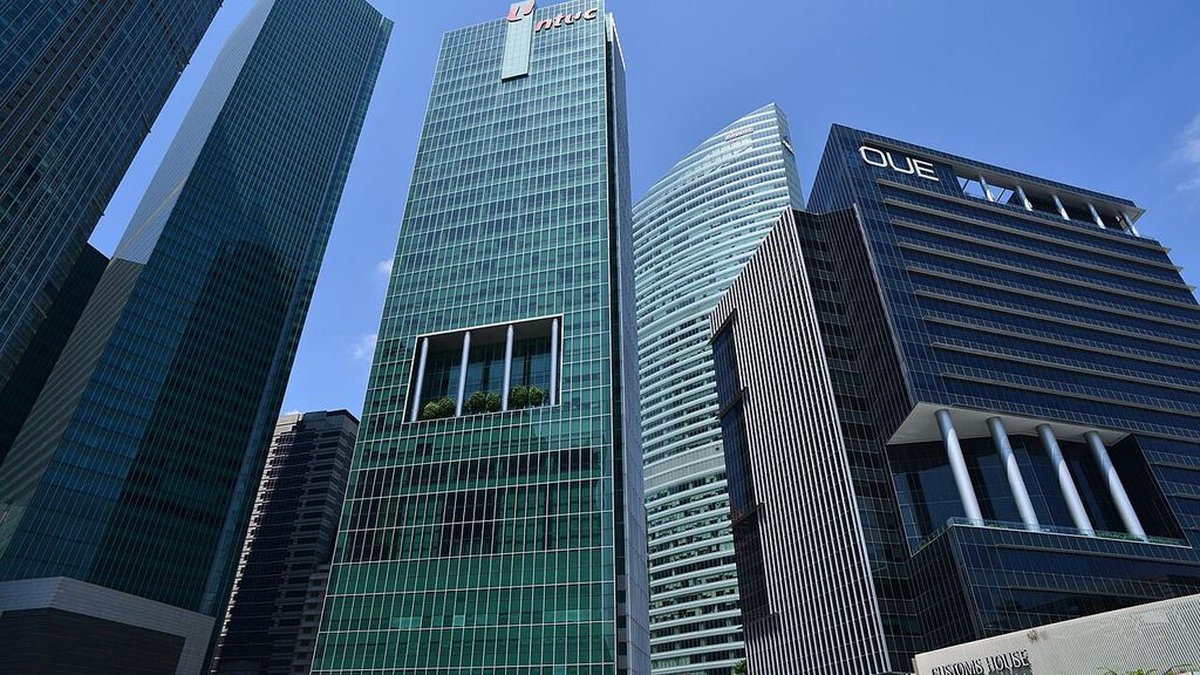
Both funds publish these figures every month. At Oct. 31, the Singapore fund (SGX code A35) had a weighted average duration of 8.64 years and a yield to maturity of 2.32%, according to its manager, Amova Asset Management Asia. The Pan Asia fund (HKEX code 2821) showed a duration of 7.19 years and a 3.42% yield to maturity in State Street Investment Management's factsheet for the same date.
What a bond ETF holds, and what it does not promise
A single bond repays its face value on a fixed date. The U.S. Securities and Exchange Commission's investor bulletin defines maturity as that future date when the face value is returned. A bond ETF holds hundreds of bonds chosen to track an index (State Street says it uses a stratified sampling approach to match its benchmark), so there is no single repayment date to wait for. The factsheets give an average instead: 9.75 years to maturity for the Pan Asia fund's portfolio of 680 bonds.
That difference matters when prices fall. An investor holding one government bond to maturity gets the face value back if the issuer pays. An ETF investor sells at whatever the market price is on the day, and State Street's factsheet warns that investors may not get back the full amount invested.
The Singapore fund is mostly a sovereign portfolio. The Government of Singapore made up 83.7% of holdings, followed by the Housing & Development Board at 10.2% and the Land Transport Authority at 4.0%, Amova said. The Pan Asia fund spreads across local-currency government and quasi-government bonds in eight markets, led by China at 24.89%, Singapore at 16.10% and Korea at 15.79%.
Duration: the number that predicts the next price swing
Duration measures how sensitive a bond's price is to interest-rate changes. FINRA, the U.S. brokerage regulator, gives a simple rule: a bond with a duration of 10 would be expected to fall about 10% if rates rose 1 percentage point, and rise about the same if rates fell by that much. Longer maturities raise duration, while higher coupons lower it.
Applied to the October figures, a 1-point rise in yields across its holdings would cut the Singapore fund's value by roughly 8.6%. For the Pan Asia fund, the estimate is about 7.2%. A half-point fall in yields would add roughly 4.3% and 3.6% respectively. These are first-order estimates; Endowus, the Singapore-based wealth platform, notes in a guide updated in September that convexity softens losses when yields rise and adds to gains when they fall.
Endowus's illustrative table shows how wide the range is. A three-month Treasury bill with a modified duration of 0.24 years would lose about 0.24% on a 1-point rate rise, while a 30-year Treasury with a duration of 16.04 years would lose about 16%. Short-dated products such as Singapore Savings Bonds and Treasury bills sit at the low end of that scale.
The real record bears this out. The Pan Asia fund returned minus 7.57% in 2022 and plus 8.12% in 2025, according to State Street. The Singapore fund lost 0.54% in the 12 months to Oct. 31 but gained 2.07% in October alone, Amova's data show.
Yield: income, cushion and what it is not
Yield to maturity is the annual return expected if every bond is held to maturity. It is not the payout. Amova states that its weighted average yield does not represent the fund's actual rate of return or distribution yield. The Pan Asia fund separately reports a current yield of 3.54% and an average coupon of 3.56%.
A useful way to combine the two numbers is to divide duration by yield. That gives a rough count of how many years of income it would take to recover the price loss from a 1-point rise in yields. For the Singapore fund, 8.64 divided by 2.32 is about 3.7 years. For the Pan Asia fund, 7.19 divided by 3.42 is about 2.1 years. The calculation ignores reinvestment at higher yields, which shortens the recovery somewhat, but it shows how much rate risk each unit of income carries.
Distributions also lower the price. Both funds pay semiannually at the manager's discretion, and Amova notes that any distribution is expected to reduce the fund's net asset value immediately.
Currency: the hidden third bet
The Pan Asia fund's base currency is the U.S. dollar, and it trades in dollars in Hong Kong, but its bonds are in eight Asian currencies. State Street reports its returns in U.S. dollar terms, so moves in the yuan, Singapore dollar, won and ringgit against the dollar feed straight into results. For Hong Kong investors, whose currency is pegged to the dollar, that is a basket of Asian currency exposure on top of the bond exposure.
The Singapore fund's base currency is the Singapore dollar, and Amova quotes its yield in local-currency terms on an unhedged basis. For a Singapore investor there is no currency gap. An investor in Jakarta or Hong Kong buying the same units takes on the Singapore dollar's moves as well.
The trading price can also drift from the value of the bonds. On Oct. 31, the Pan Asia fund closed at US$111.60 against a net asset value of US$111.84, a gap of about 0.2%.
Costs are low by fund standards. The Pan Asia fund's ongoing charges were 0.18% for the year to June 30, 2026, while the Singapore fund's total expense ratio was 0.24% for the year to June 30, 2025. Singapore investors can also buy A35 with Supplementary Retirement Scheme money or through the CPF Investment Scheme's Ordinary Account, where only balances above S$20,000 can be invested, the factsheet says.
For U.S.-listed bond funds, tax treatment differs again, a point covered in how fund domicile changes withholding tax.
The figures move quickly. The Singapore fund's net asset value was S$1.1145 per unit on Nov. 17, down from S$1.1223 at the end of October, according to Amova's fund page.
This article is general information, not financial advice.
Sources
- Amova Asset Management Asia: ABF Singapore Bond Index Fund: October 2026 Factsheet (Oct. 31, 2026)
- Amova Asset Management Asia: ABF Singapore Bond Index Fund (Nov. 17, 2026)
- State Street Investment Management: ABF Pan Asia Bond Index Fund (2821) Fact Sheet (Oct. 31, 2026)
- FINRA: Brush Up on Bonds: Interest Rate Changes and Duration (Sept. 19, 2024)
- U.S. Securities and Exchange Commission (Investor.gov): Investor Bulletin: Interest Rate Risk, When Interest Rates Go Up, Prices of Fixed-Rate Bonds Fall (June 26, 2013)
- Endowus: Bond yields and duration: What every investor needs to know (Sept. 14, 2026)
Our standards: Capital Times reports under the principles set out in our Editorial Standards and Ethics Policy. Spotted an error? Report it to our editors.