Malaysia Rubber Output Jumps 18.8% in September as Stockpiles Climb to 142,523 Tons
Exports fell 11.9% as stocks rose 5.6%, while futures in Osaka, Shanghai and Singapore climbed last week, according to Japan Exchange Group.
What to know
- Malaysia produced 31,657 tons of natural rubber in September, up 7.3% from August and 18.8% from a year earlier, the Department of Statistics Malaysia said on Nov. 10.
- Malaysian natural rubber stocks rose 5.6% to 142,523 tons in September, while exports fell 11.9% to 29,438 tons, the department said.
- The Osaka Exchange's April 2027 rubber contract rose 4.1% in the week to Nov. 13, and SICOM's February contract gained 5.6%, Japan Exchange Group said.
KUALA LUMPUR
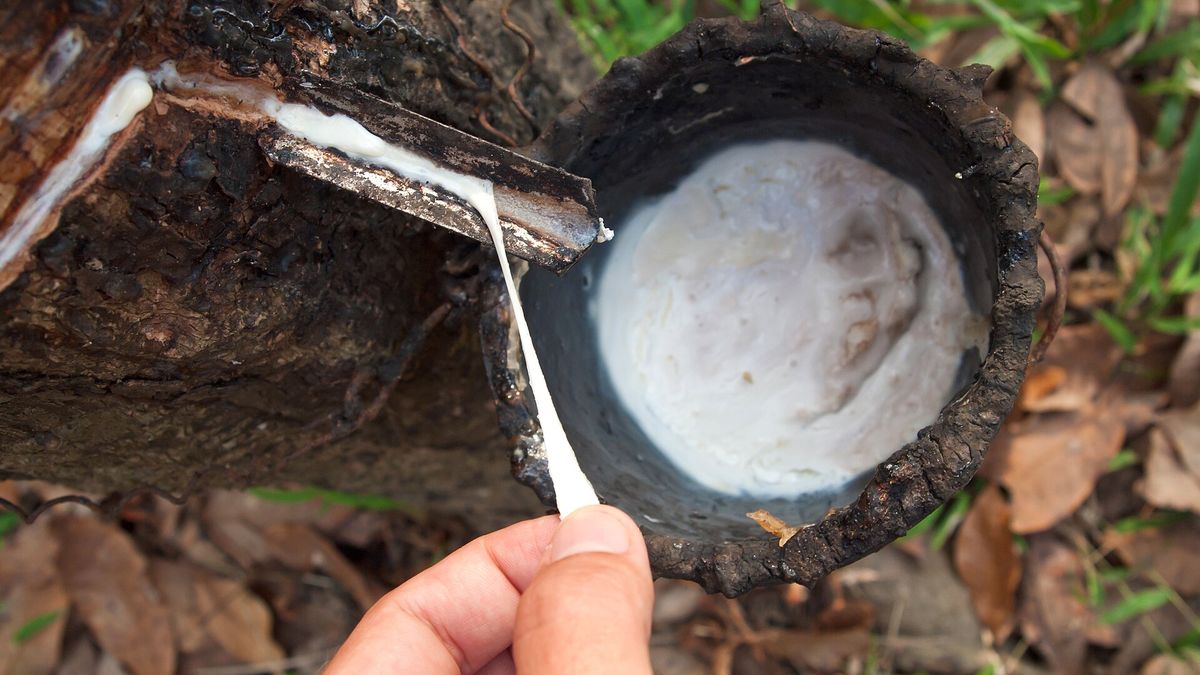
Malaysia's natural rubber production rose 18.8% from a year earlier to 31,657 tons in September, the Department of Statistics Malaysia said on Nov. 10, as supply across Southeast Asia picks up with Thailand entering its peak tapping season. Output was up 7.3% from August's 29,510 tons, and stocks in the country climbed 5.6% to 142,523 tons.
The figures land at an awkward moment for anyone betting on lower prices. Rubber futures in Osaka, Shanghai and Singapore rallied in the week to Nov. 13 as Chinese commodity funds and industrial buyers stepped back in, according to a weekly report from Japan Exchange Group, which runs the Osaka market. For Asian tire companies, glove makers and the smallholders who grow most of the region's rubber, the tug between rising supply and returning buyers will set raw material costs going into year-end.
Malaysia's output rises, exports fall
Smallholders produced 89.5% of Malaysia's September rubber, with estates accounting for the rest, the statistics department said. The bigger harvest did not translate into more shipments. Exports fell 11.9% to 29,438 tons from 33,426 tons in August, while stocks rose. Processing factories held 76.5% of the stockpile, and rubber consumers' factories held 23.4%.
China remained the top buyer, but its share shrank sharply. It took 33.4% of Malaysia's natural rubber exports in September, down from 47.3% in August, according to the department's releases for the two months. Germany took 18.9%, the United States 8.1%, Turkiye 6.5% and Portugal 3.7%.
The quarterly picture is less flattering. Production in the third quarter jumped 35% from the second quarter to 88,093 tons, but that was still 6.1% below the 93,815 tons produced in the third quarter of 2025, the department said. Xinhua, China's state news agency, also reported the quarterly decline.
Local prices were mixed. Concentrated latex averaged 6.81 ringgit a kilogram in September, down 1.1% from August, while scrap rubber averaged 8.56 ringgit, up 9.1%, the department said. Citing World Bank data, it put the September price of TSR 20 (Technically Specified Rubber) at $2.41 a kilogram, up 7.6% from a month earlier. Rubber gloves, Malaysia's largest export made from natural rubber, brought in 1.3 billion ringgit in September, down 9.5% from August.
Futures rebound after four weeks of declines
The Osaka Exchange's April 2027 rubber contract ended the week of Nov. 9 to 13 up 4.1%, or 17.6 yen, at 441.7 yen a kilogram, Japan Exchange Group said in its weekly report published on Nov. 16. Rubber on the Shanghai Futures Exchange settled 5.0% higher, and the Shanghai International Energy Exchange contract gained 6.0%. In Singapore, SICOM's February 2027 contract rose 5.6%, or 13.2 cents, to 250.4 U.S. cents a kilogram.
The exchange operator said commodity funds and speculators were estimated to have bought a combined 300,000 tons of rubber futures on Chinese exchanges after four straight weeks of declines. It also said consumers had entered the market, paying premiums of about 10 to 20 cents a kilogram over SICOM front-month prices for December deliveries. A weaker yen, which closed the week at 159.71 per dollar, helped the Osaka contract, according to the report.
The gains were not smooth. On Thursday, Nov. 13, the Osaka April contract fell 0.98% to 436.5 yen, as Thailand moved from its rainy season into peak harvesting and tire production stayed weak compared with a year earlier, Reuters reported in a story carried by Business Recorder, citing analysts at broker Shenyin Wanguo Futures.
Weather remains the wild card. Shanghai's sharp rise on Wednesday, Nov. 12, was probably set off by a World Meteorological Organization report on El Niño, analysts at Minmetals Futures said, according to Reuters. They added that there was no sign yet of large-scale production cuts, and that the weather premium could fade quickly if peak-season output arrives as usual.
Tire demand and what comes next
Demand from carmakers is the other half of the trade. China's domestic passenger vehicle sales are projected to fall below 19 million units this year, the first time since 2014, a Chinese auto association said on Nov. 12, according to Reuters. Capital Times has reported on China's October car sales. Japan Exchange Group said year-end vehicle demand in China and other markets was expected to improve after several months of weak sales.
Tire makers are still expanding capacity in the region. China's largest tire maker, ZC Rubber, has announced plans for a 344,195-square-meter plant in Vietnam, according to the exchange's report. The report also cited International Rubber Study Group figures showing global rubber production fell 2.3% in the first half of 2026 and demand fell 2.8%, leaving a deficit of 1.47 million tons.
Chinese warehouse stocks dipped last week. Rubber inventories tracked by the Shanghai Futures Exchange stood at 157,957 tons on Nov. 13, down 5,000 tons from a week earlier, the JPX report showed.
For the Osaka April contract, the exchange operator's technical outlook pointed to a range of 432 to 445 yen this week. Malaysia's next monthly rubber statistics, covering October, are due on Dec. 10.
Sources
- Department of Statistics Malaysia: Monthly Rubber Statistics, September 2026 (Nov. 10, 2026)
- Department of Statistics Malaysia: Monthly Rubber Statistics, August 2026 (Oct. 12, 2026)
- Xinhua: Malaysia's natural rubber production falls in Q3 (Nov. 10, 2026)
- Japan Exchange Group: The Japan Rubber Futures Weekly Report: November 9 to November 13, 2026 (Nov. 16, 2026)
- Business Recorder (Reuters): Japan rubber futures down (Nov. 13, 2026)
Our standards: Capital Times reports under the principles set out in our Editorial Standards and Ethics Policy. Spotted an error? Report it to our editors.