Yuen Kee Dumpling Owner Readies Hong Kong IPO as Cheaper Pork Lifts Chain's Profit
The franchise-heavy wonton chain earns most of its money selling fillings to store owners, and falling hog prices have widened its margins.
What to know
- Yuen Kee Food Group plans a pre-roadshow this week and an IPO of more than HK$392 million that could open as soon as Nov. 27, the South China Morning Post reported, citing people familiar with the matter.
- The chain had 4,773 stores at May 31, 2026, 99.5% of them franchised, and about 95% of its revenue comes from selling ingredients to franchisees.
- Adjusted net profit rose 164% in the first five months of 2026 to about 185 million yuan, helped by cheaper pork, which lifted the gross margin on fillings to 36.1% from 28.1%.
HONG KONG
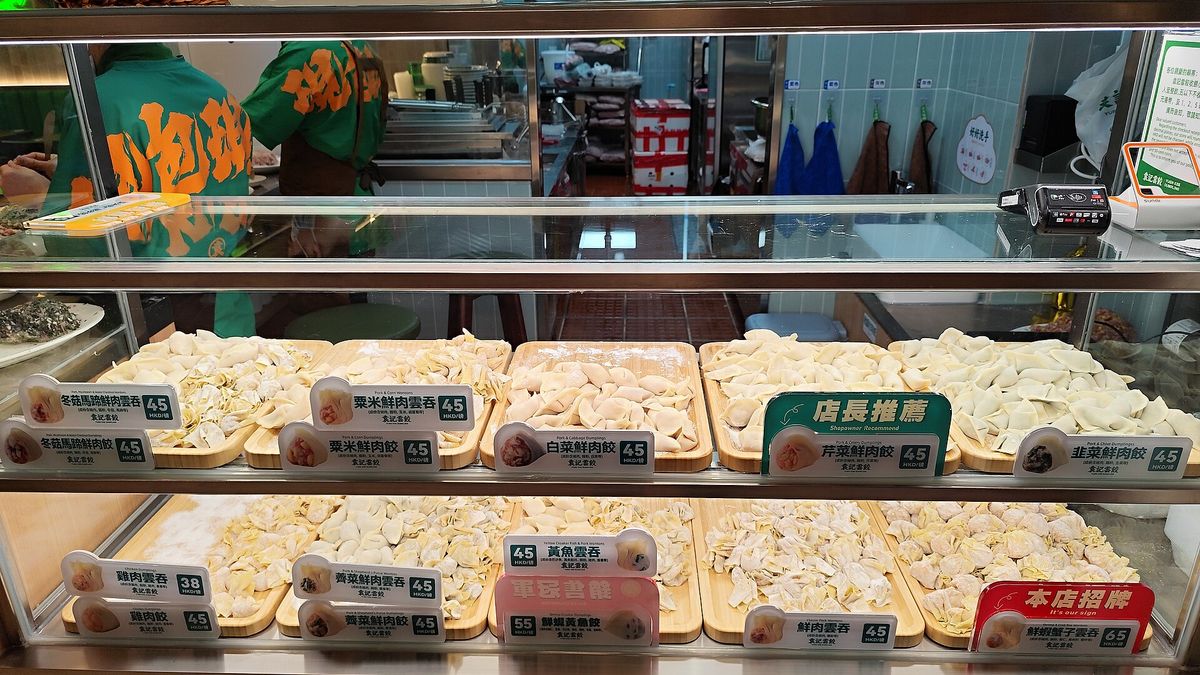
The company behind Yuen Kee Dumpling, a wonton and dumpling chain with nearly 4,800 outlets, is preparing to test Hong Kong investors' appetite for Chinese restaurant stocks after a year in which the sector has struggled to list.
Yuen Kee Food Group plans a pre-roadshow this week for an initial public offering of more than HK$392 million (US$50 million), and could launch the offering as soon as Nov. 27, the South China Morning Post reported last week, citing people familiar with the matter. The size could still change, the Post said. Huatai International and GF Securities are joint sponsors.
The deal is running late. The company cleared its listing hearing in September. At the time, people familiar with the plan told the Post the offering would start in October, and Chinese financial media expected the same, with a target of HK$300 million to HK$400 million.
A completed listing would carry weight beyond its modest size. None of the 103 companies that listed in Hong Kong in the first eight months of 2026 was a restaurant operator, Phoenix Finance reported in October, and rival Lao Xiang Ji has seen its prospectus lapse five times. The same report said Hong Kong's exchange and securities regulator had tightened due diligence on restaurant listings at the end of 2025, with closer questions on store economics, closures and franchisee relationships. The wider market has also cooled: about one in four Hong Kong IPOs attempted this year failed to complete, as Capital Times reported.
A supply business with a restaurant sign
Yuen Kee began in 2012 as a 5-square-meter stall in a Guangzhou market, according to Phoenix Finance. By May 31, 2026, it had 4,773 stores, of which only 23 were company-operated, according to prospectus figures reported by China Industry Daily. It describes itself as China's largest Chinese-style fast-food chain by store count, citing consultancy CIC.
The franchise structure shapes how the company makes money. About 95% of revenue comes from selling fillings, wrappers and other prepared ingredients to franchisees, rather than from serving diners, China Industry Daily reported. Fillings alone brought in 1.496 billion yuan in 2025, contributing 446 million yuan of gross profit, or about 64% of the group total, Phoenix Finance said. Investors already know the trade-offs from franchise-led drink chains such as Mixue, where store openings have slowed and closures have risen, as Capital Times reported.
Revenue rose to 2.795 billion yuan in 2025 from 2.026 billion yuan in 2023, though growth slowed to 9.1% last year from 26.4% in 2024. Adjusted net profit was 262 million yuan in 2025, up from 180 million yuan a year earlier, China Industry Daily reported.
Pork prices did the heavy lifting
This year's jump owes a lot to the hog market. In the five months to May, revenue climbed 39.8% to about 1.31 billion yuan and adjusted net profit rose 164% to 185 million yuan, according to the prospectus figures. Phoenix Finance attributed much of the gain to cheaper pork, which lifted the gross margin on fillings to 36.1% from 28.1%.
That cuts both ways. Raw materials account for at least 83% of cost of sales, and three pork suppliers made up 22.8% of purchases in the period, Cailian Press reported from the filing. The company estimates that a 30% move in key raw material prices would shift pre-tax profit by about 169 million yuan. China's average hog price stood at 10.53 yuan a kilogram on Sept. 16, down 23.42% from a year earlier, the same report said, so the company is coming to market while its main input is cheap.
Store-level numbers are softer. Average daily sales per store fell to 4,687.6 yuan in 2025 from 5,394.4 yuan in 2023, and the average order shrank to 22.7 yuan in early 2026 from 26.1 yuan in 2023, according to Cailian Press. Daily sales per store slipped further, to 4,627.3 yuan, in the first five months of 2026.
Southeast Asia as the growth story
Overseas expansion is a headline use of the proceeds. The chain opened its first store abroad, in Singapore, at the end of 2024 and had more than 60 overseas outlets by September, including 47 in Singapore and 14 in Thailand, Phoenix Finance reported. Gross merchandise value outside mainland China, including Hong Kong and Macao, reached 173 million yuan in the first five months of the year, up 97%, the same report said. The company aims for more than 100 stores across Malaysia, Singapore and Thailand by the end of 2027 and 150 by the end of 2028, according to Cailian Press.
Before the offering, the founding Yuan family controlled 82.54% of the voting rights, and its valuation rose to about 3.5 billion yuan from 2.5 billion yuan with a funding round in December 2025, after it raised roughly 460 million yuan in three rounds, China Industry Daily reported. BA Capital, a consumer investor that previously backed Pop Mart and Heytea, was among the backers, according to the Post; China Industry Daily said it was the sole investor in the 2023 Series A round.
What to watch: the final price range and valuation against that 3.5 billion yuan mark, whether cornerstone investors sign on, and whether a successful debut reopens the door for other Chinese restaurant chains still waiting to list in Hong Kong.
Sources
- South China Morning Post: Yuen Kee Food IPO one step closer, eyes US$50m Hong Kong debut: sources (Nov. 20, 2026)
- South China Morning Post: Yuen Kee Food enters final stage of Hong Kong IPO after HKEX approval, sources say (Sept. 11, 2026)
- Cailian Press via Phoenix Finance: 袁记食品通过港交所聆讯 港股餐饮IPO迎来“破冰” (Yuanji Food passes HKEX hearing, breaking the ice for restaurant IPOs) (Sept. 29, 2026)
- Phoenix Finance: 一盘饺子敲开港股大门,袁记却不靠饺子赚钱 (A plate of dumplings opens the Hong Kong door, but Yuanji does not earn its money from dumplings) (Oct. 12, 2026)
- China Industry Daily via Phoenix Finance: 袁记食品冲刺“饺子第一股” (Yuanji Food sprints to become the first dumpling stock) (Oct. 12, 2026)
- Phoenix Finance: “饺子馄饨第一股”或将到来,袁记云饺海外门店超60家 (First dumpling and wonton stock may be coming; Yuanji Yunjiao has more than 60 overseas stores) (Oct. 9, 2026)
- The Standard: Parent company of Yuen Kee Dumpling files for HK IPO (Jan. 12, 2026)
Our standards: Capital Times reports under the principles set out in our Editorial Standards and Ethics Policy. Spotted an error? Report it to our editors.