Britannia Sales Jump 16.6% to 5,542 Crore Rupees but Palm Oil and Milk Costs Squeeze Margin
India's biggest biscuit maker sold 13% more by volume in the September quarter, yet operating profit grew at half that pace and the shares fell as much as 5%.
What to know
- Britannia Industries' consolidated sales rose 16.6% to 5,542 crore rupees in the quarter ended Sept. 30, with volume up 13%.
- Operating profit rose 8.5% to 943 crore rupees and owners' share of net profit rose 10.2% to 721 crore rupees.
- Refined palm oil cost 17% more than a year earlier, milk 16% and industrial fuel 45%, the company's investor presentation showed.
MUMBAI
Britannia Industries, India's largest biscuit maker, said consolidated sales rose 16.6% from a year earlier to 5,542 crore rupees in the quarter ended Sept. 30, its fastest growth in at least two years, but sharply higher prices for palm oil, milk and fuel held operating profit growth to 8.5%. Owners' share of net profit rose 10.2% to 721 crore rupees, according to an investor presentation the company filed with Indian exchanges on Friday, Nov. 6.
For investors across Asia who hold Indian consumer stocks as a bet on domestic demand, the quarter offered both halves of the argument. Shoppers bought more: the company reported volume growth of 13%, according to its results statement as reported by Angel One. But Britannia is paying more for nearly everything that goes into a packet of biscuits, and the market focused on that. The shares fell as much as 5% in Mumbai on Friday to an intraday low of 4,749.30 rupees, Business Today reported.
Britannia's volumes return to double digits
The headline growth rate stands out against Britannia's recent record. Consolidated sales grew 4% in fiscal 2024 and 6% in fiscal 2025, and 8% in the year ended March 2026, the presentation showed. The September quarter's 5,542 crore rupees compares with 4,752 crore rupees a year earlier and 4,964 crore rupees in the June quarter. For the first half of fiscal 2027, sales rose 13.1% to 10,506 crore rupees and owners' share of profit rose 11.7% to 1,312 crore rupees.
Chief Executive and Managing Director Rakshit Hargave said the company delivered "double-digit growth in volume and value," Angel One reported, adding that Britannia is watching inflation and will lean on execution, new products and cost control.
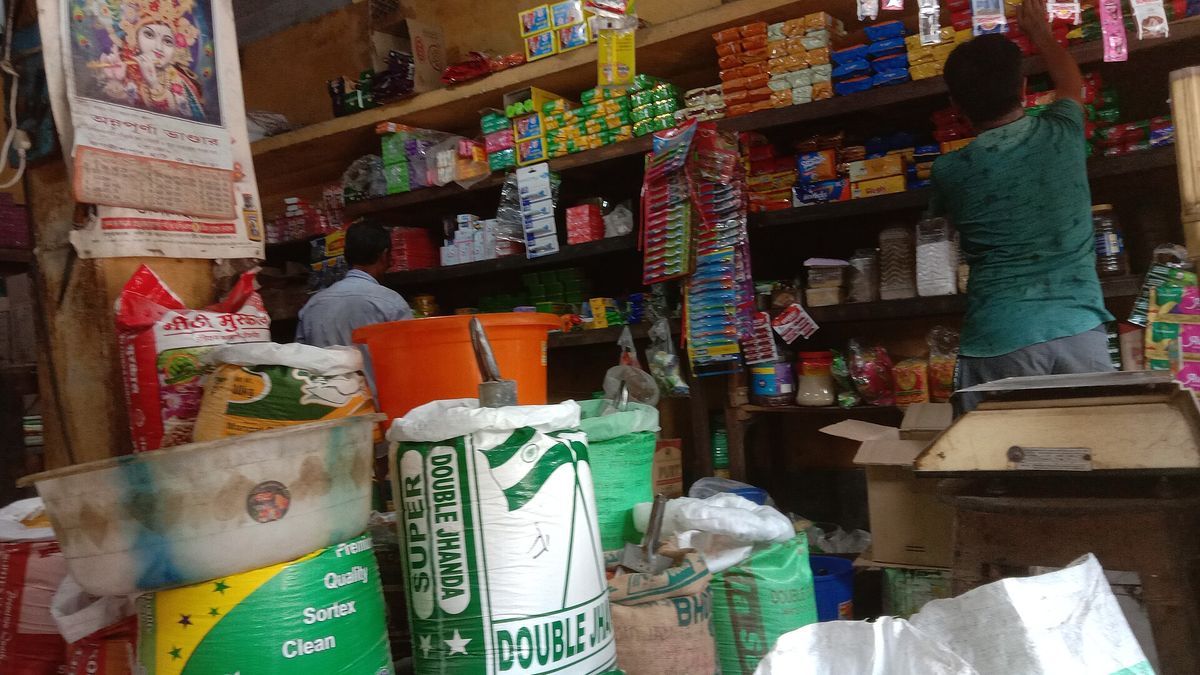
With volume up 13% and sales up 16.6%, roughly 3.6 percentage points of growth came from price increases and a richer product mix. Growth came from several directions. Sales through general trade, the small neighborhood shops that still dominate Indian grocery, grew at 2.6 times the rate recorded in the last fiscal year, while other channels grew 1.8 times faster than general trade. E-commerce now accounts for about 7% of the business, the presentation said.
Britannia's push beyond biscuits also paid off. Cakes, rusks, wafers and croissants together grew more than 20% in the quarter, and the dairy unit, led by cheese, ghee and milk drinks, grew at a double-digit pace. The international business, which sells in the Middle East, Africa, Nepal and the Americas, returned to growth in the mid-teens. Key states, which provide more than half of domestic revenue, grew 2.8 times faster than in the last fiscal year.
Palm oil, milk and fuel costs eat into the gains
The cost side explains why profit lagged sales. Refined palm oil, the main fat in most biscuits, cost 17% more on average than in the same quarter last year and 11% more than in the June quarter, Britannia said. Milk rose 16% from a year earlier, packaging laminates 18%, sugar 6% and industrial fuel 45%. Flour was the only major input that was cheaper than a year ago, down 4%, although it rose 9% from the previous quarter.
Britannia said strategic purchase cover kept its input costs below market prices, without saying for how long. It is the same squeeze that has hit other Indian manufacturers this autumn; Maruti Suzuki also blamed commodity costs for a profit decline in the same quarter.
Operating profit came to 943 crore rupees, or 17.0% of sales. That was well above the 15.3% margin in the June quarter but below last year: by Capital Times' calculation from the company's figures, operating profit a year earlier was about 869 crore rupees, or roughly 18.3% of sales. Profit before tax rose 10.6% to 977 crore rupees. Owners' share of net profit equaled 13.0% of revenue, against 11.9% in the June quarter.
Some reports put net profit at 726 crore rupees, up 10.8%. That figure includes minority interests; the 721 crore rupees in the company's presentation is the share attributable to Britannia's owners.
What Britannia shareholders watch next
Sequentially the quarter was strong. Sales rose 11.6% from the June quarter and owners' profit 21.9%, the presentation showed. The question for the stock is whether Britannia can keep raising prices while volumes hold up, if palm oil and dairy stay expensive into the second half.
The company said the audio recording and transcript of its Nov. 6 analyst call will be filed with the exchanges and posted on its website, which should give investors management's detailed view on pricing and costs. Industrial fuel was the one input that eased from the June quarter, falling 21%.
Sources
- Britannia Industries (NSE filing): Presentation for Investors/Analysts Conference Call, Quarter and Half Year Ended 30 September 2026
- Business Today: Britannia Q2 results: Revenue climbs to Rs 5,542 crore, profit rises 10%; stock reacts
- Angel One: Britannia Industries share price up 2.32%, reports 10.8% growth in Q2FY27 net profit
Our standards: Capital Times reports under the principles set out in our Editorial Standards and Ethics Policy. Spotted an error? Report it to our editors.