Taste Gourmet Profit Rises 22% as New Hong Kong Restaurants Draw 19% More Diners
The owner of Nabe Urawa and Golden Dragon opened 10 outlets in six months and raised its payout, even as the average bill per diner slipped.
What to know
- Taste Gourmet's profit attributable to shareholders rose 21.8% to HK$64.8 million in the six months to Sept. 30, on revenue up 13.4% to HK$743.8 million.
- Customer numbers rose 19.3% to about 3.45 million, while average spending per diner fell to HK$215.6 from HK$226.7 as cheaper formats grew.
- The group declared an interim dividend of 11 Hong Kong cents a share, up from 8 cents, and ran 81 restaurants at the date of its report.
HONG KONG
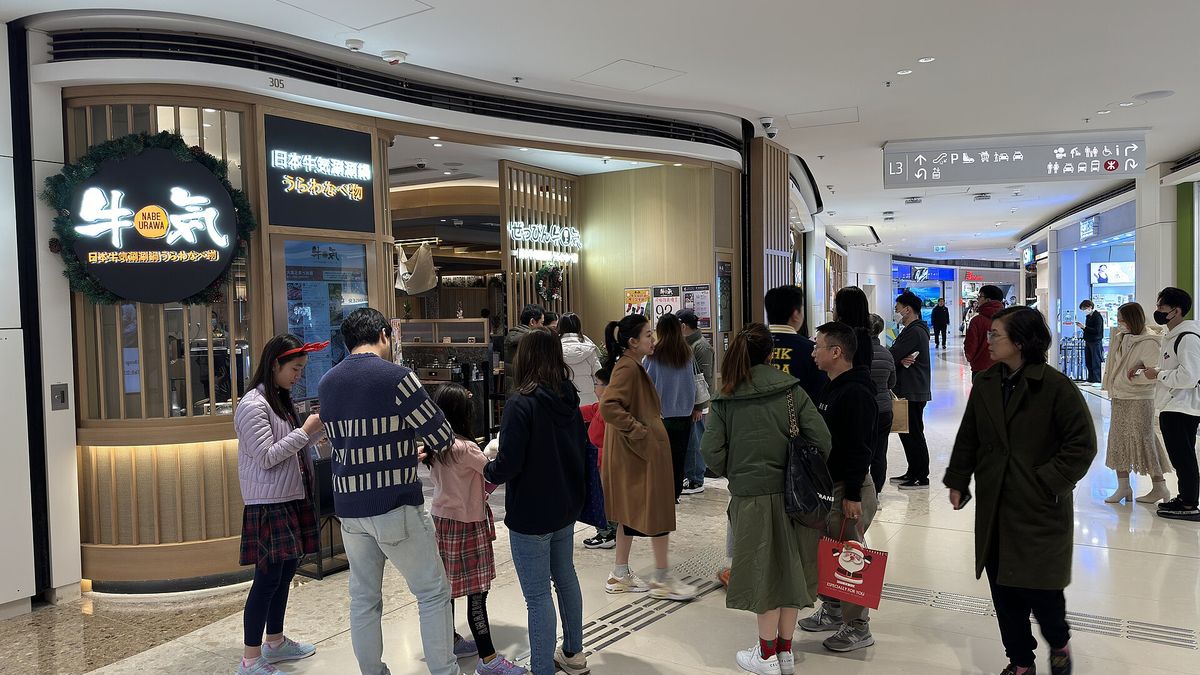
Taste Gourmet Group, the Hong Kong operator behind the Nabe Urawa hot pot chain and a string of mall restaurants, said half-year profit rose 21.8% as a burst of new openings brought in almost a fifth more diners, and it raised its interim dividend by more than a third.
Profit attributable to shareholders reached HK$64.8 million in the six months to Sept. 30, up from HK$53.2 million a year earlier, according to results filed with the Hong Kong stock exchange on Tuesday, Nov. 24. Revenue climbed 13.4% to HK$743.8 million. The board declared an interim dividend of 11 Hong Kong cents a share, up from 8 cents, which amounts to a payout of about 65% of profit, above the group's stated floor of 50%.
The GEM-listed company opened 10 restaurants in the period and closed three, ending September with 79 outlets. By the date of its report it had 81: 78 in Hong Kong and three on the Chinese mainland.
More diners, smaller bills
The growth came from volume rather than pricing. Customer visits rose 19.3% to about 3.45 million, while average spending per customer fell to HK$215.6 from HK$226.7, the filing showed. The company attributed the lower average bill to faster growth at cheaper formats, including its Western restaurants and a new bakery business, where diners spent an average of HK$57.90.
The cuisine breakdown shows where the money came from. Japanese and Korean restaurants, which include Nabe Urawa and Yakiniku Guu, generated 48.3% of revenue and grew 14.3%. Western restaurants were the fastest-growing segment, with revenue up 76.6% to HK$47.6 million. Chinese restaurants grew only 3.1%, and the average bill there fell to HK$235.5 from HK$246.1. Southeast Asian restaurants, including the Khao San and new Kru Thai brands, bucked the trend: average spending rose to HK$160.5 from HK$150.1 and daily seat turnover improved to 3.2 from 2.5.
That pattern matches official data. Hong Kong restaurant receipts rose 3.1% from a year earlier to a provisional HK$27.5 billion in the third quarter, the Census and Statistics Department said on Nov. 3. Non-Chinese restaurants led with a 7.1% gain in value, while Chinese restaurants managed 1.2%, as Capital Times reported earlier this month.
Costs grew more slowly than sales
Margins improved because the biggest cost lines rose more slowly than revenue. Food and consumables increased 11.5% and slipped to 27.2% of revenue from 27.7%. Staff costs rose 8.0% and fell to 29.5% of revenue from 30.9%, the company said. Net profit as a share of revenue rose to about 8.7% from 8.1%.
Not every line moved in the right direction. Property rentals and related charges rose 17.8%, and other expenses rose 19.1% as more outlets operated, edging up to 4.9% of revenue from 4.7%, which the company put down mainly to higher credit card fees charged by financial institutions. Depreciation on fixtures and equipment climbed 17.7% as the new outlets came on stream.
The balance sheet gives the group room to keep opening. It had no bank borrowings at the end of September and held about HK$302.6 million in cash and cash equivalents plus HK$30.3 million in longer time deposits. It employed 1,840 people, 96.5% of them in Hong Kong.
Taste Gourmet is not alone in lifting earnings this season. Fairwood tripled its interim dividend on Monday, Nov. 23, after leaner operations and cost control lifted its profit 150%. Rival fast-food chain Cafe de Coral said on Nov. 4 that it expected half-year profit to rise 105% to 125%, to between HK$95.8 million and HK$105.2 million, citing tighter cost controls and a stabilizing business on the mainland, The Standard reported. Cafe de Coral scheduled a board meeting for Friday, Nov. 27, to approve its interim results, according to an exchange filing.
What to watch: more mall leases and a new katsu brand
The group listed six confirmed leases for new outlets. Two have already opened since September: a 366 San Roku Roku Pan bakery at Harbour City in October and a Golden Dragon at Langham Place in November. The others include a Match 2 Taiwanese restaurant and another 366 San Roku Roku Pan at The Elements, both due in the fourth quarter. Its newest deal, announced Nov. 10 and still awaiting the landlord's signature at the time, is a five-year lease at Tuen Mun Town Plaza for a sixth Golden Dragon and the first outlet of Kuro, a Japanese katsu brand aimed at younger customers than its existing Tsukanto chain, with both expected to open in the first quarter of 2027.
That growth carries a familiar risk for mall-based operators: every new site adds rent and depreciation that must be covered whether diners come or not. The company has shown it will cut losers quickly. It closed three restaurants in the half, including a Nabe Urawa at The One in Tsim Sha Tsui, because returns did not justify the staff deployed.
Management struck a cautious tone. In its outlook, the board said it would stay careful about the short-term economy and consumer confidence in Hong Kong, and stressed that customers need to feel they are getting their money's worth. For the full year to March 2026, the group lifted profit 22.9% to HK$117.4 million on revenue of HK$1.35 billion, its annual results showed. Matching that pace in the second half will depend on whether the newer, cheaper formats can keep filling seats as the openings slow.
Sources
- Taste Gourmet Group Limited (HKEX filing): Interim results announcement for the six months ended 30 September 2026 (Nov. 24, 2026)
- Taste Gourmet Group Limited (HKEX filing): Annual results announcement for the year ended 31 March 2026 (June 25, 2026)
- Taste Gourmet Group Limited (HKEX filing): Voluntary announcement: new lease agreement for the opening of a new Golden Dragon and a new Kuro restaurant (Nov. 10, 2026)
- Hong Kong SAR Government (Census and Statistics Department): Provisional statistics of restaurant receipts and purchases for third quarter of 2026 (Nov. 3, 2026)
- The Standard: HK fast food chain Cafe de Coral sees doubling profit for April-September (Nov. 4, 2026)
- Cafe de Coral Holdings Limited (HKEX filing): Cafe de Coral Holdings: Notification of board meeting (Nov. 16, 2026)
Our standards: Capital Times reports under the principles set out in our Editorial Standards and Ethics Policy. Spotted an error? Report it to our editors.