Bank of Korea Minutes Keep a Nov. 26 Hike to 3.25% in View as Board Weighs the Pace
All seven board members backed October's pause at 3%, but most still see tightening ahead, and domestic forecasters largely expect a quarter-point move.
What to know
- Minutes of the Bank of Korea's Oct. 22 meeting show all seven board members voted to hold the base rate at 3.00% while most signaled that tightening would continue.
- Woori Financial Group's research institute expects a quarter-point increase to 3.25% at the Nov. 26 meeting, Media Pen and Global Economic News reported.
- Korean consumer prices and core prices both rose 2.8% from a year earlier in October, above the central bank's 2% target.
SEOUL
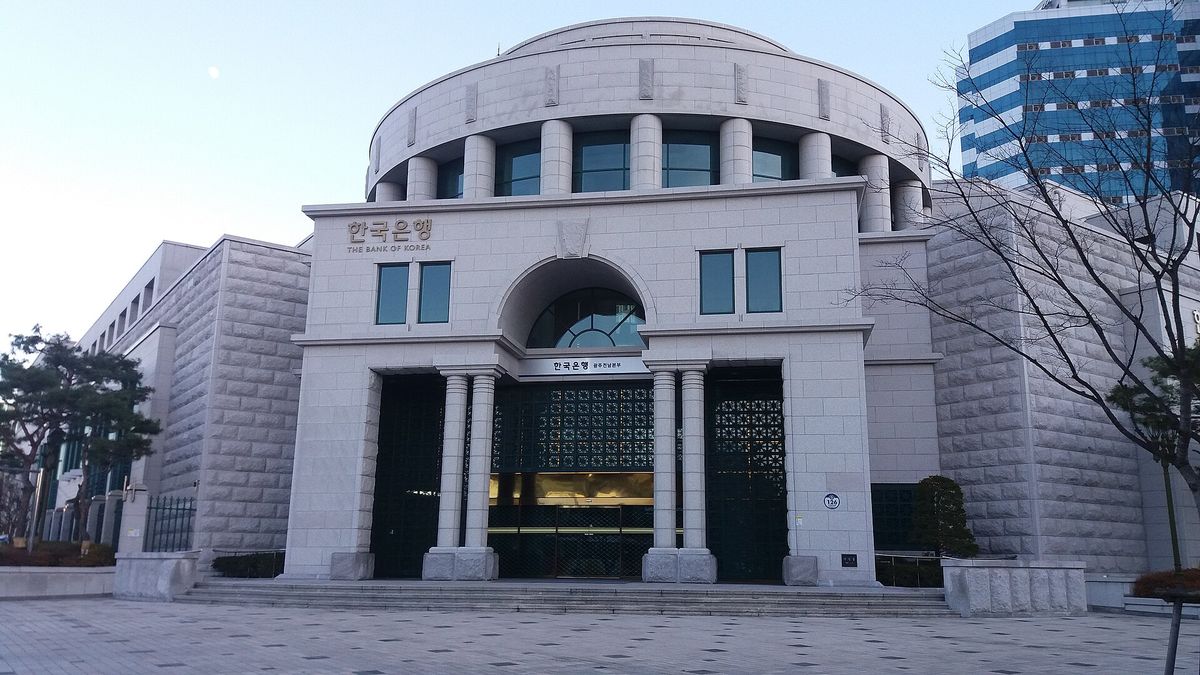
The Bank of Korea paused in October, but the record of that meeting reads less like a stop than a breather. Minutes of the Oct. 22 session, released last week, show all seven members of the Monetary Policy Board backed holding the base rate at 3.00%, while most of them described the pause as a chance to gauge the effect of two back-to-back hikes before resuming. The board meets again on Nov. 26 for its last rate decision of the year, and most domestic forecasters expect a quarter-point increase to 3.25%.
For investors in Korean bonds, the won and the Kospi, the question has shifted from whether the tightening cycle is over to how fast it continues. A November hike would be the third since July. Another pause would leave Korea's rate gap with the U.S. Federal Reserve wider at a time when the Fed itself is debating larger moves.
What the Bank of Korea minutes show
The board's decision in October was unanimous, according to the minutes, and each member who spoke on the rate gave a reason to wait. The common thread was time: the July and August increases needed to work through lending rates and the currency before the board judged the next step.
The tone varied more than the vote. One member argued that the tightening stance needed to continue, and warned that a sharp jump in nominal growth could add demand pressure and keep core inflation high for longer. Another said underlying inflation would likely stay above target for a considerable period, so the board should keep tightening and decide the timing and size of further increases as conditions develop.
A third member pointed to the Fed's hawkish messaging after its September hike and to U.S. September inflation that beat expectations, and said price pressure in Korea had spread to durable goods and personal services. That member favored adjusting the timing and pace of further tightening.
The most cautious view came from a member who noted that the dollar had fallen to the 1,330-won range despite broad dollar strength, and credited the two hikes, stronger growth forecasts and dollar sales by large exporters. That member said tighter financial conditions had given the board room to slow down, and spoke of judging carefully "whether and when" to raise rates again. Another member warned that delinquency rates among vulnerable borrowers were very high, noted that the gains from record growth were concentrated in a few sectors, and called for structural reform to lift productivity in services, including small self-employed businesses.
Oil was a recurring worry. Several members cited higher crude prices tied to the conflict in the Middle East, and Aju Business Daily reported that the minutes showed members alert to second-round effects from oil and to demand-driven inflation from solid growth. Staff also told the board that the November economic outlook would extend its forecast horizon to 2028.
Inflation and the case for Nov. 26
The data since the October meeting have done little to settle the debate in favor of a longer pause. Consumer prices rose 2.8% in October from a year earlier, down from 2.9% in September, and core inflation held at 2.8%, according to Media Pen and Aju Business Daily, both above the bank's 2% target. Capital Times covered the October inflation figures and the role of fuel prices earlier this month.
Woori Financial Group's research institute expects the board to lift the base rate to 3.25% on Nov. 26, citing chip-driven growth, core inflation in the high 2% range and rising home prices around Seoul, Global Economic News and Media Pen reported. Mega Economy cited an Oct. 22 Edaily review of bond reports from 10 securities firms in which nine forecast a November hike. Hana Securities, NH Investment & Securities and Hanwha Investment & Securities also see another increase early in 2027, which would take the rate to 3.50%, according to Mega Economy.
Housing and credit remain part of the argument. Several board members flagged rising prices in the Seoul area and continued growth in housing-related loans, a trend Capital Times reported in October household lending data.
The Fed gap and the market's doubts
The U.S. side adds pressure. Aju Business Daily reported that the federal funds target range of 3.75% to 4.00% sits a full percentage point above Korea's base rate, after the Fed's September hike widened a gap the Bank of Korea had narrowed in July and August. As of Nov. 11, CME FedWatch put the chance of a half-point Fed increase in December at 13.1%, the paper said. If Seoul held this month and the Fed moved by half a point, the gap would reach 1.5 percentage points.
Governor Shin Hyun-song said in October that the earlier, preemptive hikes allowed the bank to set policy on domestic conditions rather than following the Fed, according to Aju Business Daily.
Not everyone is sure about a hike. The recent stock selloff has pulled down expectations for where the cycle ends: on Nov. 6, when the Kospi fell sharply, the three-year Korean Treasury yield dropped to 3.613%, only 11.3 basis points above a 3.50% terminal rate, Aju Business Daily reported. Im Jae-gyun, a researcher at KB Securities, told the paper that a November move remained his base case but that a hold could not be ruled out, and that some members might argue for one even if the board raises rates.
Woori's institute expects yields to drift lower regardless, with the three-year yield falling to 3.65% by the end of November from 3.72% at the end of October and the won strengthening to 1,320 per dollar from 1,334, Media Pen reported. It cited foreign bond buying and the government's decision to cut October and November bond issuance by 5 trillion won each.
The board will publish its decision and new growth and inflation forecasts on Nov. 26. Investors will watch the size of the upgrades to the 3.3% growth forecast for 2026 and whether any member dissents in favor of a pause.
Sources
- Bank of Korea: 2026년도 제20차 금융통화위원회(정기) 의사록 (Minutes of the 20th Monetary Policy Board meeting of 2026) (Nov. 10, 2026)
- Aju Business Daily: 美 '빅스텝' 거론에 한은 금리 인상 압력 커지나 (Nov. 11, 2026)
- Media Pen: 한은 금리 인상에도 국고채·환율 하락 전망 (Nov. 14, 2026)
- Mega Economy: 한은, 11월 기준금리 인상 전망…시장금리 향방·은행권 셈법 복잡 (Nov. 9, 2026)
- Global Economic News: 우리금융硏 “한은, 11월 금통위서 기준금리 3.25%로 인상 전망” (Nov. 9, 2026)
Our standards: Capital Times reports under the principles set out in our Editorial Standards and Ethics Policy. Spotted an error? Report it to our editors.