UOB Quarterly Profit Nearly Triples to S$1.25 Billion but Misses Forecasts, Shares Fall 5%
Record fee income could not offset a thinner lending margin and weaker trading gains at Singapore's third-largest bank, which reported a day before DBS and two days before OCBC.

What to know
- UOB said third-quarter net profit rose 182.2% to S$1.25 billion, below the S$1.38 billion consensus of six analysts polled by Bloomberg.
- UOB's net interest margin narrowed to 1.68% from 1.82% a year earlier, while net fee income rose 19% to a record S$733 million.
- UOB shares were down 5% at S$38.46 at 9:29 a.m. on Nov. 4, with DBS and OCBC due to report on Nov. 5 and Nov. 6.
SINGAPORE
United Overseas Bank said on Wednesday that its third-quarter net profit rose 182.2% from a year earlier to S$1.25 billion, but the figure fell short of the S$1.38 billion consensus forecast of six analysts polled by Bloomberg, and the bank's shares dropped 5% in early trading.
The jump looks large only because the comparison is weak. A year earlier UOB's net profit had collapsed 72% to S$443 million after it set aside S$1.36 billion in allowances for credit and other losses, according to The Business Times. For investors in Singapore's banks, the more telling numbers sit underneath the headline: lending margins kept shrinking and trading gains fell, while fee income and wealth management fees hit records. UOB is the first of the city's three lenders to report this week. DBS Group follows on Thursday and Oversea-Chinese Banking Corp. on Friday.
Margins thin as UOB fee income hits a record
Net interest income, still the bank's largest revenue line, edged up 1% to S$2.28 billion from S$2.27 billion a year earlier. The net interest margin, which measures how much a bank earns on its loans over what it pays for funding, narrowed to 1.68% from 1.82% a year earlier, according to The Business Times. Reuters, in a report carried by The Star, said the margin fell 6 basis points from the second quarter and that the bank attributed the decline to higher funding costs.
Fees were the bright spot. Net fee income rose 19% to S$733 million, a record, on growth in wealth management, cards and loan-related business. Wealth management fees alone reached a record S$258 million, and net new money from clients totaled S$5 billion over the first nine months of the year, Reuters reported. Income from treasury products sold to customers also hit a high on demand for hedging, The Business Times said.
The weak spot was the bank's own book. Trading and investment income fell 33% to S$322 million as market conditions turned less favorable, according to Reuters, which pulled other non-interest income down 29% to S$370 million.
Credit costs, the problem a year ago, eased sharply. Allowances for credit and other losses fell 81% to S$258 million. The non-performing loan ratio improved to 1.5% from 1.6% a year earlier.
The miss was smaller by a different yardstick. LSEG data cited by Reuters put the mean estimate of two analysts at S$1.35 billion, still above what UOB delivered.
For 2027, UOB said it expects loan growth in the mid-single digits, net interest income above 2026 levels and fee income growth in the mid- to high-single digits, according to Reuters.
UOB shares fall as DBS and OCBC results approach
The market reaction was quick. UOB shares fell 5.3% to S$38.30 at the open on Wednesday and were down 5%, or S$2, at S$38.46 by 9:29 a.m., The Business Times reported. About 2.5 million UOB shares changed hands in that window, compared with 1.5 million for DBS and 1.3 million for OCBC. Both peers were down more than 1% in early trading in a weaker market.
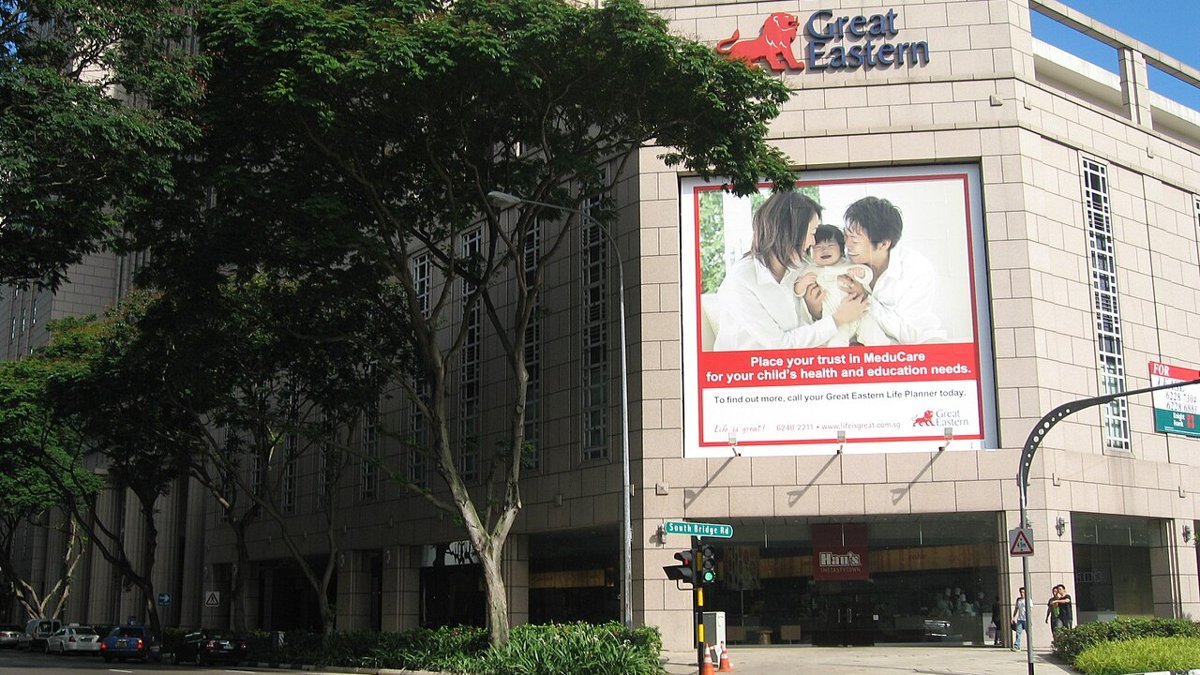
The selloff extends a difficult week for Singapore bank stocks. On Monday, Nov. 2, the three lenders all closed lower, with OCBC down 3.3% at S$28.32 after its insurance arm Great Eastern reported a 72% drop in quarterly profit. The losses in the banks pulled the Straits Times Index down 1.4% to 5,303.83 that day. UOB had closed at S$40.46 on Tuesday, before its results.
The three banks together make up a large share of the index, so their earnings tend to set the tone for the broader Singapore market. Analysts had told The Business Times before the results that wealth fees could ease in the third quarter after a strong second quarter, while pressure on interest margins would persist. They also said investors would look at the banks' lending to artificial intelligence-related projects and at how rising bond yields affect their investment portfolios and capital, while expecting asset quality and capital to hold up.
UOB's numbers matched part of that script. Margins fell and trading income dropped, but fees did not ease: they reached a record. Other banks in the region have leaned on the same source of income, with Standard Chartered raising its 2026 outlook on record wealth income.
What DBS and OCBC investors will watch
The question for DBS on Thursday and OCBC on Friday is whether fee growth from wealth clients can again make up for narrower margins, and whether trading and investment income held up better than at UOB. For OCBC, investors will also look at how much Great Eastern's weaker quarter weighs on group earnings.
Markets in Asia were also watching the U.S. midterm elections held on Tuesday.
DBS is scheduled to release its third-quarter results on Nov. 5, followed by OCBC on Nov. 6.
Sources
- The Business Times: UOB Q3 net profit almost trebles to S$1.25 billion off low base, but misses forecasts (Nov. 4, 2026)
- The Business Times: UOB shares fall over 5% after Q3 earnings miss forecast (Nov. 4, 2026)
- The Star (Reuters): Singapore's UOB Q3 net profit misses forecasts; wealth momentum continues (Nov. 4, 2026)
- The Business Times: Singapore banks fall ahead of earnings release; OCBC leads bank losses as STI slides 1.4% (Nov. 2, 2026)
Our standards: Capital Times reports under the principles set out in our Editorial Standards and Ethics Policy. Spotted an error? Report it to our editors.