Japan to Lift Gasoline Price Target by 5 Yen in December as Takaichi Trims Subsidies
Tokyo will let pump prices climb from about 170 yen a liter in weekly steps, its first move to scale back fuel support introduced after the Middle East shock.
What to know
- Japan will raise its target price for regular gasoline by 2 yen on Dec. 3 and Dec. 10 and by 1 yen on Dec. 17, the industry ministry said.
- Subsidies have held the pump price near 170 yen a liter since March, after Middle East tensions pushed up fuel costs.
- Takaichi said in May that a fiscal 2026 extra budget of more than 3 trillion yen would be funded with additional deficit-financing bonds.
TOKYO
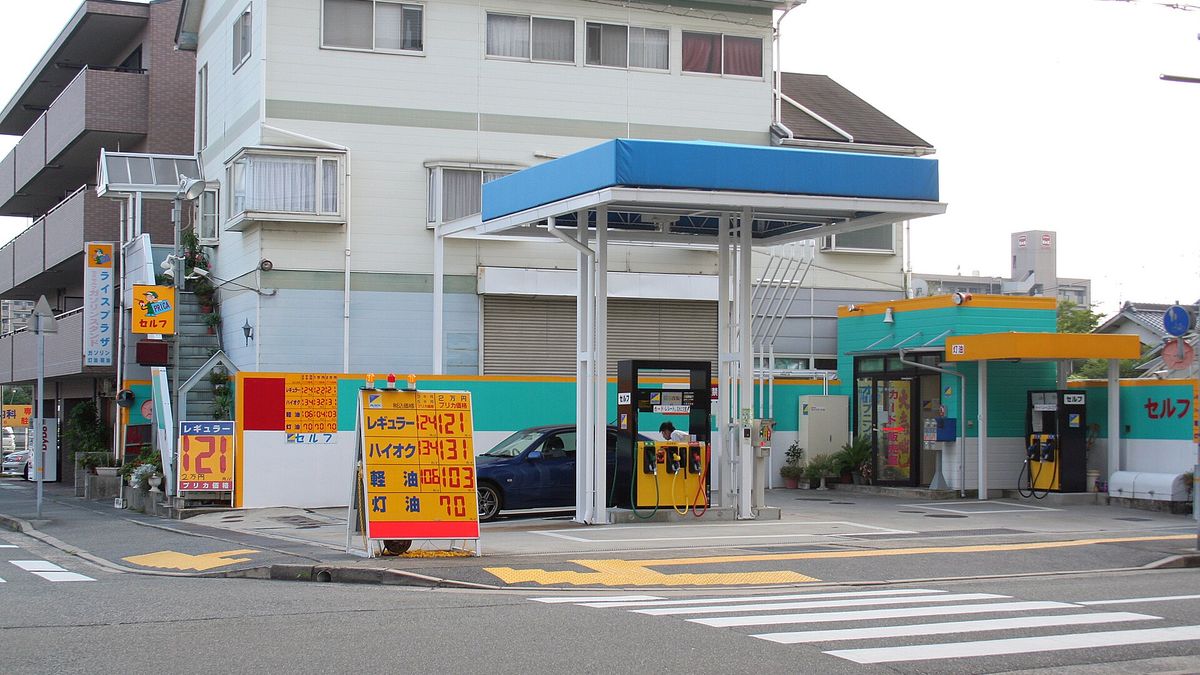
Japan will let gasoline prices rise by a total of 5 yen a liter in December, the first step in scaling back fuel subsidies that have held pump prices near 170 yen since March, the Ministry of Economy, Trade and Industry said on Oct. 30.
The move matters beyond Japan's forecourts. The subsidies, paid to oil refiners, have been one of Prime Minister Sanae Takaichi's main tools against the rising cost of living, and they have been paid for partly with borrowed money. Bond investors across Asia have watched Japan's fiscal choices closely this year, and a smaller subsidy bill is one of the few concrete signs of spending restraint.
How the Gasoline Subsidy Will Be Reduced
The government will raise its target price for regular gasoline in weekly steps, according to Jiji Press: by 2 yen on Dec. 3, another 2 yen on Dec. 10 and 1 yen on Dec. 17. The price will then stay unchanged in the final week of the month.
Officials chose small increments to avoid a last-minute rush at the pumps, Jiji reported. Takaichi said the government would cut the subsidies gradually from December so that support continues while the fiscal burden shrinks.
The program began in March, after tensions in the Middle East drove up fuel costs. When Takaichi announced a fiscal 2026 supplementary budget on May 25, she said the national average gasoline price was being held around 170 yen a liter, compared with an average of 178 yen in the year before her administration took office, according to the transcript published by the Prime Minister's Office. Asked whether that target would hold, she did not commit, saying the government would weigh price trends, the Middle East situation and the sustainability of the support.
That extra budget was projected to exceed 3 trillion yen. It included about 500 billion yen of electricity and gas support for July through September, refilled the general reserve fund to 1 trillion yen and created a new reserve for the Middle East situation and other international shocks, the transcript shows. Takaichi said it would be funded with additional deficit-financing bonds, but argued total bond issuance to the market would not rise because about 3 trillion yen of fiscal 2025 deficit bonds might not need to be issued.
Takaichi's Fiscal Policy Under Bond Market Pressure
The subsidy decision comes after a year in which markets questioned Takaichi's approach. The dollar approached 164 yen in late July, the yen's weakest level in about 39 years, up from just above 151 yen when she took office in October 2025, Jiji Press reported on Oct. 20. The 10-year Japanese government bond yield rose to 3.115% in late September, its highest in 30 years, according to the same report. Longer maturities came under more strain: the 30-year yield set a record 4.235% on Oct. 5, as Capital Times has reported.
Japan and the United States carried out their first joint intervention to support the yen in 28 years at the end of July, Jiji said. The 10-year yield, still at 3.08% on Oct. 5, has since eased and ended October below 2.8%.
Takaichi has tried to reassure investors. In parliament on Oct. 7, she said the government would take policy steps, including a review of "expenditures and revenues," if yields moved unexpectedly, Bloomberg reported. She added that reserve funds would be used flexibly if a major shock hit the economy.
A further extra budget is still possible. The Yomiuri newspaper reported in early October that the government was considering a second supplementary budget for fiscal 2026, focused on reconstruction after earthquakes and heavy rain, according to Reuters. The paper said it would likely be small and not intended as stimulus, with work starting in November and passage targeted in the ordinary parliamentary session early next year. Takaichi has pledged to end Japan's habit of large extra budgets and put needed spending into the annual budget, Reuters noted.
Food Tax Cut and Deflation Debate Next
The bigger fiscal item is the bill to cut the consumption tax on food to 1% from 8% for two years, paired with benefits for low- and middle-income workers. The ruling Liberal Democratic Party had hoped to pass it through the lower house as early as Friday, Nov. 6, Jiji Press reported on Oct. 31, with enactment planned before the parliamentary session ends on Dec. 12. Opposition parties want Takaichi to appear at the House of Representatives Financial Affairs Committee, and the two sides were set to discuss her attendance at the committee's next meeting on Wednesday, Nov. 4.
Prices are the backdrop to all of it. The Bank of Japan said on Oct. 30 that underlying inflation had reached its 2% target, yet the government remains cautious about declaring that Japan has fully left deflation behind, Jiji reported. Chief Cabinet Secretary Minoru Kihara said that position "remains unchanged." Opposition party leader Yuichiro Tamaki of the Democratic Party for the People has urged a prompt declaration.
For households, the first higher pump price arrives on Dec. 3. Whether the target keeps rising after December, and how the food tax cut is financed, are the next tests of the government's promise to support consumers without adding to the debt load.
Sources
- Jiji Press via Nippon.com: (Update) Japan to Raise Gasoline Price Target by 1-2 Yen per Week (Oct. 30, 2026)
- Prime Minister's Office of Japan: Prime Minister Takaichi Spoke to the Press Regarding the Fiscal 2026 Supplementary Budget Taking into Account the Situation in the Middle East (May 25, 2026)
- Reuters via KELO: Japan considers another extra budget for disaster relief, Yomiuri says (Oct. 7, 2026)
- Bloomberg via Yahoo Finance: Takaichi Says Japan May Review Spending if Yields Move Sharply (Oct. 7, 2026)
- Jiji Press via Nippon.com: Japanese PM Takaichi Faces Pressure over Economic Policy (Oct. 20, 2026)
- Jiji Press via Nippon.com: Japan Govt Remains Cautious on Declaring End to Deflation (Oct. 31, 2026)
- Jiji Press via Nippon.com: PM Takaichi's Attendance Key to Lower House Passage of Tax Bill (Oct. 31, 2026)
Our standards: Capital Times reports under the principles set out in our Editorial Standards and Ethics Policy. Spotted an error? Report it to our editors.