Bank Indonesia Pencils In Rupiah at 17,800 to 18,200 for 2027 as Currency Sets Record Low
The central bank's budget plan assumes a firmer currency and an unchanged 6% policy rate next year, even as the rupiah closed at its weakest level ever.
What to know
- Bank Indonesia assumes the rupiah will trade between 17,800 and 18,200 per dollar in 2027, with the BI-Rate at 6%, Governor Destry Damayanti told House Commission XI.
- The rupiah closed at 18,332 per dollar on Wednesday, its weakest close on record and outside the top of the central bank's 2027 range, Kontan reported.
- Bank Indonesia's own budget showed a surplus of Rp117.8 trillion through September, against a full-year target of Rp20.76 trillion.
JAKARTA
Bank Indonesia expects the rupiah to trade between 17,800 and 18,200 per U.S. dollar in 2027 and plans to keep its benchmark rate at 6%, assumptions that put next year's currency firmer than where the market left it this week.
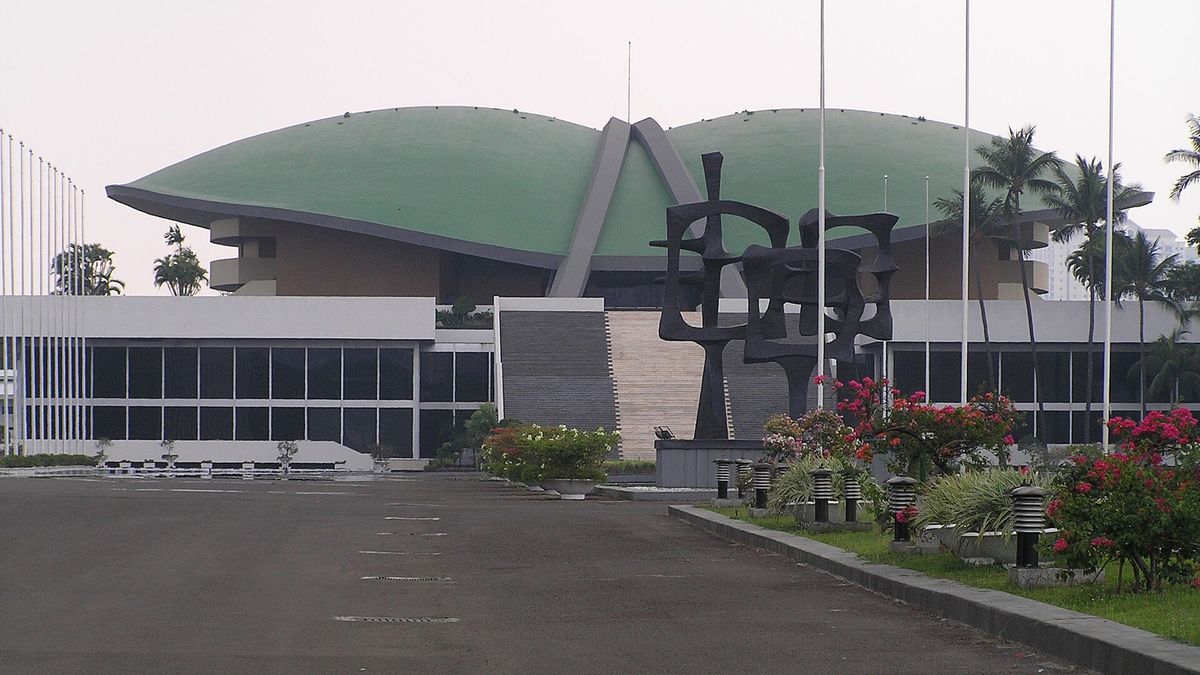
Governor Destry Damayanti laid out the figures on Wednesday in a working meeting with Commission XI of the House of Representatives at the Senayan parliamentary complex in Jakarta, where she presented the central bank's 2027 annual budget plan, according to Antara. “Rupiah kami perkirakan berada dalam rentang Rp17.800 hingga Rp18.200,” she said, meaning the bank sees the currency within that range.
The same afternoon, the rupiah closed at 18,332 per dollar, down 0.56% from 18,230 the day before, Kontan reported. The outlet called it the currency's worst close on record. Even the weak end of the central bank's 2027 range implies a rupiah about 0.7% stronger than that level, and the midpoint of 18,000 implies a gain of almost 2%.
A rate that stays put
The BI-Rate assumption of 6% for 2027 is the same level the central bank expects at the end of this year, Destry told lawmakers, according to detikFinance and Antara. That suggests the bank does not plan to reverse its latest move quickly.
Bank Indonesia raised the BI-Rate by 25 basis points to 6% on Nov. 18, lifting its deposit facility rate to 5.25% and its lending facility rate to 6.75%, the central bank said in a statement. It described the hike as a step to steady the rupiah, which had weakened 0.66% month to date to 18,245 per dollar on Nov. 17, and as a pre-emptive move to keep inflation inside its target. Capital Times argued in an editorial after that decision that the bank should also delay its planned cut in bank reserve requirements.
For 2027, the central bank assumes economic growth of 5.2% to 6%, up from its 2026 assumption of 4.9% to 5.7%, Antara reported. Inflation is expected to stay within the 2.5% target, plus or minus one percentage point. Destry warned of upside risk to prices if oil keeps climbing.
She also said the bank remains optimistic because, by its assessment, the economy is still growing below its potential capacity, detikFinance reported.
Three outside risks
Destry named three external threats for next year, according to Antara. The first is a "higher for longer" stance by major central banks. The second is heavy government debt in advanced economies, which she said raises the risk of higher global interest rates and market swings. The third is a sharp run-up in global technology shares, where high valuations and expectations around artificial intelligence leave room for a correction.
To hold the currency steady, the central bank said it will keep using policies meant to draw foreign capital into Indonesia through 2027. It will also keep markets supplied with liquidity through open market operations and by buying government bonds in the secondary market, Antara reported.
Supplying liquidity while defending the currency is a delicate balance given the rupiah's slide this month. Earlier in November, Capital Times reported on the tools the central bank set out to defend the currency as it approached a previous record low. Kontan's data showed Asian currencies mostly softer on Wednesday, with the Taiwan dollar down 0.71% and the Thai baht down 0.46%, while the Indian rupee rose 0.52%.
A large surplus on the central bank's books
At the same hearing, Destry reported that Bank Indonesia's own 2026 budget had run a surplus of Rp117.8 trillion (US$6.43 billion) through September, Antara reported. That is several times the full-year target of Rp20.76 trillion, and the bank projects a year-end surplus of Rp108.8 trillion.
Its operating budget alone collected Rp47.4 trillion in revenue and spent Rp11.6 trillion through September, leaving a surplus of Rp35.8 trillion, according to Antara. Destry said a surplus was not the central bank's main goal and tied the result to its 2026 policies on rupiah stability, economic growth and payment systems.
The figure matters for the state budget. Under the Bank Indonesia Law, what remains of the surplus after allocations to the bank's general and designated reserves is handed to the government, Antara reported. With Jakarta's own deficit widening this year, as Capital Times reported in its look at October budget data, that transfer adds to state revenue.
Beyond the hearing room, the rupiah's moves into year end will show whether a range topping out at 18,200 looks like a forecast or a target.
Sources
- ANTARA News: BI sets 2027 rupiah assumption at Rp17,800--Rp18,200, rate at 6 pct (Nov. 25, 2026)
- ANTARA: BI tetapkan asumsi rupiah Rp18.200 dan BI-Rate 6 persen pada 2027 (Nov. 25, 2026)
- detikFinance: Dolar AS Diproyeksi Rp 18.200 Tahun Depan (Nov. 25, 2026)
- ANTARA News: BI posts Rp117.8 trillion budget surplus as of September (Nov. 25, 2026)
- Kontan: Rupiah Ditutup Tembus ke Rp 18.332 Per Dolar AS, Penutupan Terburuk Sepanjang Masa (Nov. 25, 2026)
- Bank Indonesia: BI Rate Raised 25 bps to 6.00 percent: Strengthening Stability, Supporting Economic Growth (Nov. 18, 2026)
Our standards: Capital Times reports under the principles set out in our Editorial Standards and Ethics Policy. Spotted an error? Report it to our editors.