PBOC Sets Up Backstop for Bond Funds Facing Runs, Lends 621 Billion Yuan Overnight
A new swap facility would let China's largest wealth managers and fund houses borrow central bank bills in a sell-off, while daily overnight loans now anchor funding costs.
What to know
- The People's Bank of China set up the Bond Market NBFI Swap Facility on Oct. 26 to lend central bank bills to systemically important wealth managers and fund houses facing mass redemptions.
- The central bank lent 621 billion yuan through overnight reverse repos at 1.25% on Nov. 3, up from 541 billion yuan on Nov. 2.
- China's 10-year government bond yield stood at about 1.64% on Nov. 2, according to Trading Economics.
BEIJING
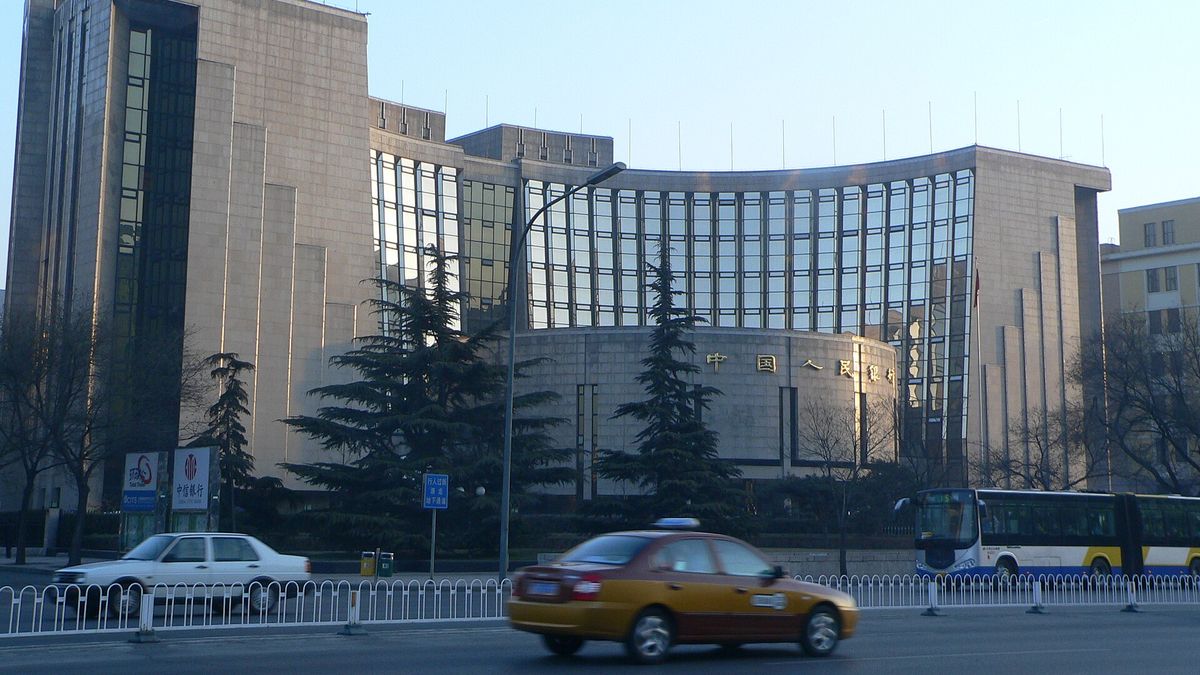
The People's Bank of China has created an emergency swap facility that would lend central bank bills to the country's largest wealth managers and mutual fund houses if a wave of redemptions forces them to dump bonds. On Tuesday the central bank also lent 621 billion yuan through its new daily overnight operations, more than on the first day of the new framework.
For investors in Asia, the two steps point the same way. Beijing is trying to keep its government bond market calm and short-term funding cheap while it rewires how monetary policy works. China's 10-year government bond yield stood at about 1.64% on Nov. 2, close to its lowest level since May 2025, according to Trading Economics. Foreign holders of Chinese bonds, and Hong Kong-listed banks and brokers with large bond books, have the most at stake if a sell-off ever turns disorderly.
How the PBOC bond backstop would work
The facility, called the Bond Market NBFI Swap Facility, or BNSF, was set up in a one-paragraph notice the PBOC published on Oct. 26 as Open Market Operations Announcement No. 12. It would be used only in a specific scenario: when asset managers face collective liquidity risk and the bond market comes under systemic pressure, the notice said.
Eligible firms are bank wealth management subsidiaries and public fund managers with systemic influence, or their parent banks and parent securities companies. They could borrow central bank bills from the PBOC and use them to raise cash in the repo market. That cash would buy eligible bonds, or units, from their own public products that are being redeemed. The firms would then pledge those assets to the central bank. Participants must keep meeting prudential requirements and maintain market discipline, the PBOC said.
The notice gave no size, price or tenor, and it did not say how the PBOC will decide which firms count as systemically important. Reuters reported the launch on Oct. 26, and Trivium China, a China policy research firm, described it the next day as a tool for managing bond crises.
The design avoids handing cash straight to non-banks. The PBOC lends bills, and the firms must raise the cash themselves in the repo market, which keeps the central bank one step removed.
Pan Gongsheng's case for a bond market backstop
PBOC Governor Pan Gongsheng laid out the plan at the Financial Street Forum in Beijing on Oct. 19, according to the text of his speech published by the Bank for International Settlements. He said the PBOC, the National Financial Regulatory Administration and the China Securities Regulatory Commission would set up a backstop for large redemptions at non-bank institutions. He described it as "a stabilization mechanism for the bond market" and a new macroprudential tool, meant for market-wide stress in which redemptions and bond sales feed on each other. Users would have to post high-grade collateral, he said.
Analysts quoted by the Economic Information Daily, a Xinhua newspaper, said the tool is meant for specific moments rather than routine use, so its direct short-term effect on bond prices may be limited.
Pan's speech also set out a wider reform. He said the standing lending facility would be opened to foreign banks incorporated on the mainland, covering all deposit-taking institutions. He said the loan prime rate would no longer be the single benchmark for loan pricing, with strong companies able to choose the overnight repo rate instead, and that old benchmark deposit and lending rates unchanged since October 2015 would be phased out.
Overnight operations now steer China's funding costs
The backstop arrived days before the PBOC changed its main policy lever. Under Announcement No. 13, dated Oct. 30, the central bank began holding overnight reverse repo auctions every working day from Nov. 2 at a fixed rate, currently 1.25%. Seven-day operations now run mainly around tax payment dates and month-ends, and tools previously priced off the seven-day rate are now priced off the overnight rate with the same spreads, the notice said. Capital Times has covered the switch to the overnight policy rate in detail.
Demand for the daily loans rose in the first two sessions under the new rules. Banks took 541 billion yuan on Nov. 2 and 621 billion yuan on Nov. 3, with the PBOC meeting all bids from primary dealers in full both days, according to its trading announcements.
Bond investors took the change as a signal of cheaper money. China's 10-year yield fell on Nov. 2 after the policy shift, Trading Economics reported, with weak October purchasing managers' surveys adding to the move: the official manufacturing index dropped to 49.3 from 50.1.
Pan said in his speech that the interbank overnight repo rate, known as DR001, had already become the PBOC's de facto target. The next test of the new setup comes at month-end in late November, when seven-day operations return and the gap between overnight and seven-day funding costs will show how tightly the central bank holds short-term rates. The PBOC has not said when it will publish operating terms for the BNSF. Pan said detailed operating information would be disclosed in open market operations announcements.
Sources
- People's Bank of China: 中国人民银行公开市场业务公告[2026]第12号 (Open Market Operations Announcement No. 12 of 2026) (Oct. 26, 2026)
- People's Bank of China: 中国人民银行公开市场业务公告[2026]第13号 (Open Market Operations Announcement No. 13 of 2026) (Oct. 30, 2026)
- People's Bank of China: 公开市场业务交易公告 [2026]第212号 (Open Market Operations Trading Announcement No. 212) (Nov. 3, 2026)
- People's Bank of China: 公开市场业务交易公告 [2026]第211号 (Open Market Operations Trading Announcement No. 211) (Nov. 2, 2026)
- Bank for International Settlements: Pan Gongsheng: Thoughts on several issues of interest to the market (Oct. 21, 2026)
- Reuters, via The Standard (Hong Kong): China's central bank sets up non-bank financial institution bond market swap facility (Oct. 26, 2026)
- Economic Information Daily, via Xinhua: 维护市场稳定 央行设立债市非银大额赎回互换便利 (Central bank sets up bond market swap facility for large non-bank redemptions) (Oct. 27, 2026)
- Trivium China: PBoC launches new swap facility to manage bond crises (Oct. 27, 2026)
- Trading Economics: China 10-Year Government Bond Yield (Nov. 2, 2026)
Our standards: Capital Times reports under the principles set out in our Editorial Standards and Ethics Policy. Spotted an error? Report it to our editors.