China Taps 550 Billion Yuan of Unused Local Debt Quota as Land Sales Revenue Falls 27.9%
Beijing is pushing local bond sales into the final weeks of the year as land revenue slumps and investment contracts, with 300 billion yuan aimed at county budgets.
What to know
- China's Ministry of Finance said it would tap 550 billion yuan in unused local government debt quotas to support county finances and investment.
- Land sales brought in 1.61 trillion yuan in the first nine months of 2026, down 27.9% from a year earlier, while tax revenue rose 6.1%.
- Local governments sold 633.9 billion yuan of special-purpose bonds in September, according to finance ministry official Zhao Zeyong.
HONG KONG
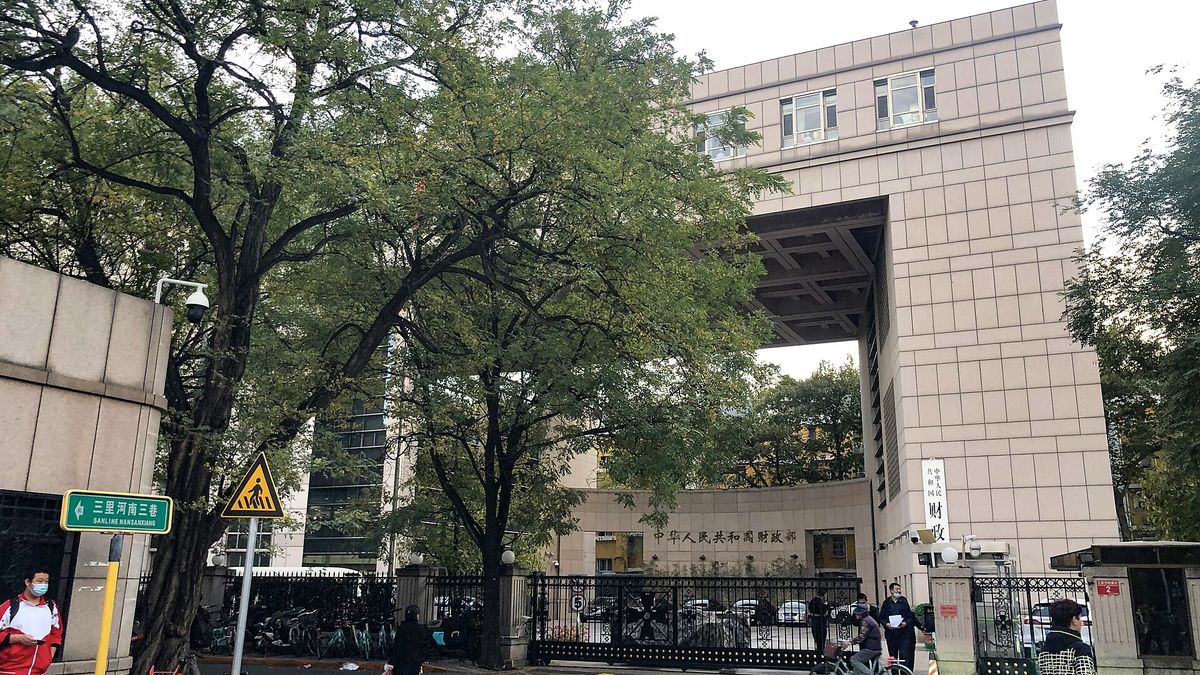
China is releasing 550 billion yuan in unused local government debt quotas to prop up county finances and investment, as revenue from land sales, long the main income source for local authorities, fell 27.9% in the first nine months of 2026.
The shift matters for investors across Asia because local governments drive much of China's spending on roads, power grids and urban projects. It also sets how much new government debt reaches China's bond market in the final weeks of the year, and how much demand for building materials and machinery follows.
The finance ministry announced the plan on Oct. 9, according to Jiemian News and Mysteel. It splits into 300 billion yuan of general debt quota, all of it for county-level governments, and 250 billion yuan of special-purpose bond quota. By Oct. 24 the amounts had been allocated, China Daily reported. Guangdong planned to sell 36.1 billion yuan of special-purpose bonds and Sichuan 10 billion yuan the following week to fund priority projects, the newspaper reported.
Land revenue slump widens the gap in local budgets
Data released by the Ministry of Finance on Oct. 23 showed general public budget revenue rose 5.1% to about 17.23 trillion yuan in January through September, according to Xinhua. Tax revenue grew 6.1% to about 14.07 trillion yuan, 0.8 percentage point faster than in the first half. Spending rose just 1% to about 21.02 trillion yuan.
The weak spot is a separate account. Revenue from government-managed funds fell 18.6% to 2.50 trillion yuan, and land sales, the bulk of that pot, brought in 1.61 trillion yuan, down 27.9% from a year earlier, China Daily reported, citing the ministry. That leaves cities with less cash for projects and debt service.
Liu Chunsheng of the Central University of Finance and Economics, told China Daily the faster tax growth pointed to an improvement in real activity. Luo Zhiheng, chief economist at Yuekai Securities, argued that fiscal funds and policy-based financing should be deployed faster to bolster effective investment.
Local authorities have already stepped up borrowing. Special-purpose bond issuance reached 633.9 billion yuan in September, Zhao Zeyong, deputy director-general of the ministry's debt management department, said at a news conference in Beijing on Oct. 23.
NDRC and the Ministry of Finance push money toward Five-Year Plan projects
The 250 billion yuan special-bond portion goes to regions with fourth-quarter financing needs, China Daily reported on Oct. 13. Projects already under construction get first claim, and new projects are to target what officials call the "six networks" of water, power, computing, telecommunications, urban pipelines and logistics.
Zheng Shanjie, head of the National Development and Reform Commission, told a symposium with private companies in Beijing that policymakers would step up countercyclical adjustment and pledged to "devise more policy tools with strong catalytic effects in a timely manner." He called for early construction of major projects under the 15th Five-Year Plan, which covers 2026 to 2030. The NDRC had also presented 88 projects with planned investment of 113.8 billion yuan to private investors in September, aiming to draw 31.1 billion yuan of private money.
The urgency reflects soft demand. Yuan Haixia, who heads the research institute at China Chengxin International Credit Rating, told China Daily that investment had contracted since the second quarter while consumption stayed under pressure. The economy grew 4.5% in the third quarter, a pace that beat forecasts but left officials leaning on fiscal tools, and the official factory PMI fell to 49.3 in October.
A heavy debt stock and the next checkpoint
The extra borrowing lands on an already heavy stock. Outstanding local government debt reached about 54.8 trillion yuan at the end of 2025, up 15% from a year earlier and below the 57.9 trillion yuan ceiling approved by the National People's Congress, Yicai Global reported in February. About 680 billion yuan of bonds sold in early 2026 were special refinancing bonds to replace hidden debt, and the central government ordered a larger share of this year's special bonds to go to project construction.
The next checkpoint is the ministry's October fiscal data, due later this month, which will show whether the bond money is turning into spending. Guosheng Securities chief economist Xiong Yuan told China Daily earlier in October that the added funding put full-year growth of at least 4.5% comfortably within reach.
Sources
- China Daily: Fiscal measures expected to expand investment (Oct. 24, 2026)
- Xinhua via english.www.gov.cn: China's fiscal revenue sees steady growth in Jan.-Sept. (Oct. 23, 2026)
- China Daily: More stimuli set to stabilize economy (Oct. 13, 2026)
- Jiemian News: 增量政策持续落地,财政部安排使用5500亿地方债结存限额 (Oct. 9, 2026)
- Mysteel Global: China announces additional local government debt quota to support growth (Oct. 13, 2026)
- Yicai Global: China's 2026 Local Gov't Bond Issuance Hits USD332 Billion as Infrastructure Push Kicks Off Early (Feb. 27, 2026)
Our standards: Capital Times reports under the principles set out in our Editorial Standards and Ethics Policy. Spotted an error? Report it to our editors.