China's Appliance Trade-Ins Pass 100 Million Units as Subsidy Funds Are Fully Allocated
Phones and smart devices are carrying the program while appliance sales still trail last year, and Beijing has handed out all 250 billion yuan of this year's money.
What to know
- China's Ministry of Commerce said appliance trade-ins exceeded 100.99 million units and smart-device purchases 120.6 million units from January to September.
- The NDRC and Ministry of Finance released a fourth tranche of 62.5 billion yuan in September, completing this year's 250 billion yuan for trade-ins.
- Retail sales of home appliances and audio-visual equipment at larger retailers fell 4.9% in the first nine months, while communication equipment rose 18.1%.
BEIJING
Chinese households traded in more than 100.99 million home appliances under Beijing's consumer subsidy program in the first nine months of 2026, the Ministry of Commerce said, and the central government has now handed out every yuan of the 250 billion yuan it set aside for trade-ins this year.
The numbers matter for investors in Asia because the program has become Beijing's main lever on household spending, and it is now running into its limits just as the Singles' Day shopping festival peaks on Nov. 11. Appliance makers, handset brands and e-commerce platforms listed in Hong Kong and Shenzhen have leaned on subsidies to support volumes. The latest data suggest the support is helping phones and gadgets far more than refrigerators and washing machines.
Ministry of Commerce data: phones outpace appliances
A head of the ministry's Department of Circulation Development gave the figures on Oct. 26 in a review of wholesale and retail trade, according to state broadcaster CCTV and reports by Jiemian and IT Home. Purchases of digital and smart products under the program exceeded 120.6 million units from January to September, outnumbering appliance trade-ins.
Official retail data point the same way. Retail sales of communication equipment at larger retailers rose 18.1% from a year earlier in the first nine months, to 812.3 billion yuan, the ministry official said, citing the National Bureau of Statistics. In September alone the category grew 31.1%, the fastest of 16 product groups and the strongest monthly pace since June 2025.
Appliances are a different story. Retail sales of home appliances and audio-visual equipment at larger retailers fell 4.9% to 810.5 billion yuan in the first nine months, according to statistics bureau data cited by the trade publication China Home Appliance Network; the bureau's Oct. 19 headline release does not list this category. September sales rose 1.9%, a modest turn. The publication noted that trade-in unit counts and the bureau's retail sales figures are measured on different bases and cannot be compared directly.
The pace picked up in the third quarter. The Commerce Ministry reported 63.266 million appliance trade-ins for the first half, according to a July report carried by CCTV+. That implies about 37.7 million in the third quarter, a calculation by Capital Times, compared with roughly 31.6 million a quarter in the first half.
Trade-in subsidy pot fully allocated
In September the National Development and Reform Commission and the Ministry of Finance released a fourth tranche of 62.5 billion yuan in ultra-long special treasury bond funds for consumer goods trade-ins, completing the full-year allocation of 250 billion yuan, Xinhua Finance reported on Sept. 30, citing the NDRC. Appliance trade-ins had reached 91.458 million units by the end of August, the NDRC said.
Under this year's rules, buyers of top-grade energy- or water-efficient refrigerators, washing machines, televisions, air conditioners, water heaters and computers get a subsidy of 15% of the final price, capped at 1,500 yuan per item and one item per person in each category. Phones, tablets, smartwatches and smart glasses are also covered. Local governments have more room this year to add their own categories; Jiangsu province and Shanghai added embodied-intelligence robots, according to the July report.
The wider consumer picture remains soft. Total retail sales of consumer goods rose 1.1% in the first three quarters to 37 trillion yuan, statistics bureau data show, and sales at larger retailers fell 1.5%, dropping 2.1% in September. Those figures were part of the same data release that showed third-quarter growth beating forecasts, with factories rather than shoppers doing most of the work.
The Commerce Ministry pointed to some brighter spots. Value added in wholesale and retail rose 4.4% to 11.1 trillion yuan in the first nine months, 0.7 percentage point faster than in the first half, and rural retail sales grew 2.3%, outpacing cities.
Singles' Day tests demand after the subsidies
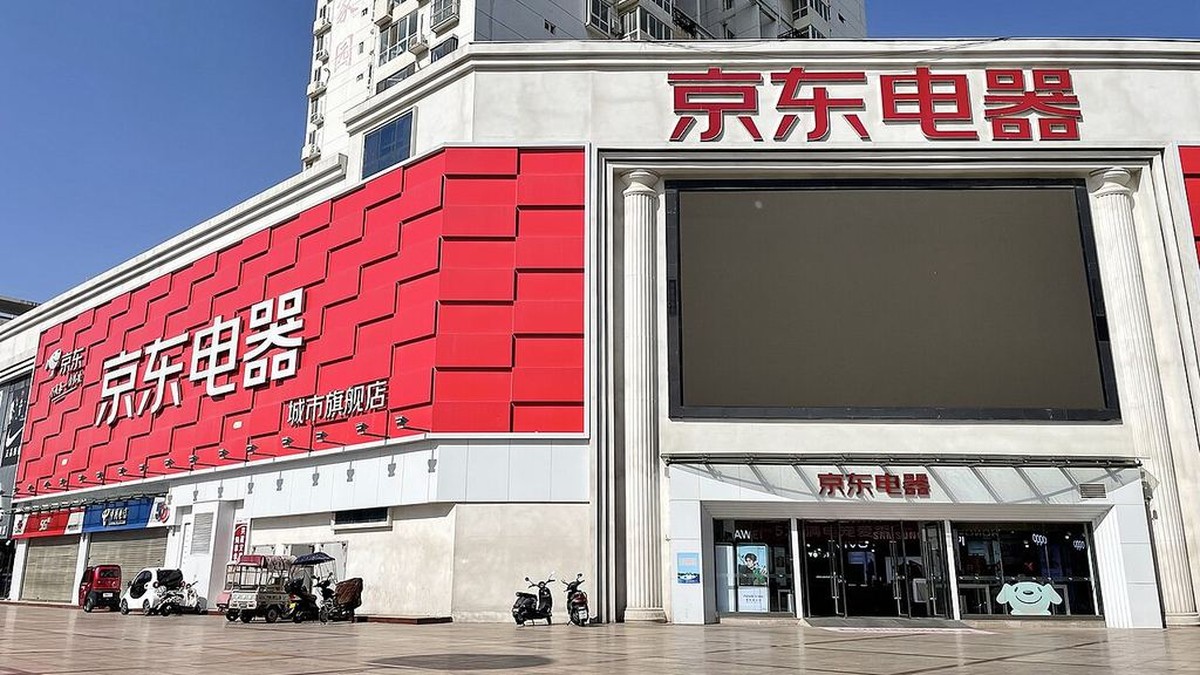
The trade-in figures arrive in the closing stretch of the 18th Double 11 festival. Alibaba's Tmall opened presales in mid-October, with deposits followed by final payments on Oct. 20, while JD.com started a spot sale on Oct. 12 focused on appliances and digital devices, the Global Times reported. Douyin added livestream subsidies and platform-wide coupons, and platforms are promoting "national subsidy" programs on eligible products.
Hu Qimu, a professor at Huaqiao University's Maritime Silk Road Institute, told the newspaper the festival's energy is lower than a few years ago because consumers have become more rational and spread purchases out. Hu called this year's warm-up "a concentrated test of consumer confidence."
Online sales offer a partial cushion. Online retail sales of goods and services rose 4.4% to 15.1 trillion yuan in the first nine months, statistics bureau data show, faster than total retail sales.
With this year's subsidy budget spent, the next markers are the October retail sales data from the statistics bureau, due in mid-November, and any statement from Beijing on whether and how the trade-in program will be funded in 2027.
Sources
- Jiemian: 商务部:2026年以来家电以旧换新累计超10099万台 (Oct. 26, 2026)
- IT Home: 商务部:2026 年以来家电以旧换新累计超 10099 万台 (Oct. 26, 2026)
- China Home Appliance Network via Sina Technology: 商务部:今年以来家电以旧换新累计超1亿台 (Oct. 27, 2026)
- National Bureau of Statistics of China: 前三季度经济运行总体平稳 高质量发展取得新成效 (Oct. 19, 2026)
- Global Times: China's 'Double 11' shopping festival highlights steady consumer demand, longer shopping season (Oct. 12, 2026)
- Bastille Post Global (CCTV+): China's consumer goods trade-in program generates 1.1 trillion yuan sales (July 23, 2026)
- Xinhua Finance (cnfin.com): 国家发展改革委:2026年2500亿元超长期特别国债支持消费品以旧换新资金已全部下达 (Sept. 30, 2026)
- CCTV News via Beijing Daily: 商务部:今年1月至9月我国批发和零售业增加值11.1万亿元,同比增长4.4% (Oct. 26, 2026)
Our standards: Capital Times reports under the principles set out in our Editorial Standards and Ethics Policy. Spotted an error? Report it to our editors.