Tims China Sales Fall 18% and Loss Widens as Brand Owner Funds the Turnaround
The Tim Hortons operator closed a net 22 stores and leaned on US$45.8 million of convertible notes from the brand owner as China's coffee price war wore on.
What to know
- TH International's revenue fell 18% to RMB293.6 million in the quarter to Sept. 30, and its net loss widened to RMB133 million from RMB73.8 million.
- Same-store sales fell 13.4% across the network, an improvement from a 17.8% drop in the second quarter, and the chain ended September with 1,006 stores.
- Tim Hortons Restaurants International bought US$45.8 million of senior secured convertible notes in three tranches between July and October to fund operations.
SHANGHAI
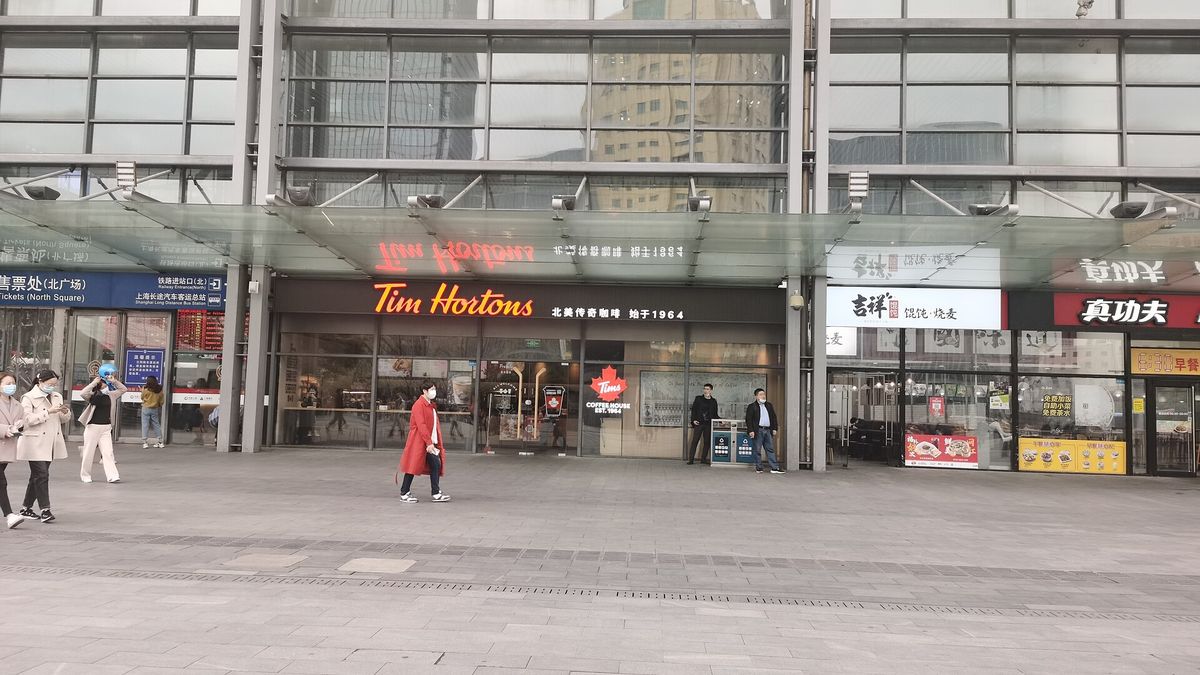
The company that runs Tim Hortons coffee shops in mainland China, Hong Kong and Macau said its third-quarter revenue fell 18% and its net loss almost doubled, as it shut more stores than it opened and relied on its Canadian brand owner for cash to keep running.
TH International Ltd., the Nasdaq-listed operator known as Tims China, reported revenue of RMB293.6 million (US$43.8 million) for the three months to Sept. 30, down from RMB358 million a year earlier, according to results released Monday in Shanghai and New York. System sales, which include franchised stores, fell 11.9% to RMB369.8 million.
The net loss widened to RMB133 million (US$19.8 million) from RMB73.8 million. That figure includes a RMB38 million fair-value loss on convertible notes. Stripping out such items, the adjusted net loss was RMB71.4 million, against RMB53.8 million a year earlier, and the adjusted corporate EBITDA loss grew to RMB37.3 million from RMB15 million.
A smaller chain, propped up by its brand owner
Same-store sales fell 13.4% across the network. That was still a steep decline, but it was milder than the 17.8% drop in the second quarter. The company ended September with 1,006 stores: 548 company-owned and 458 franchised. It opened 44 shops and closed 66 during the quarter, a net reduction of 22.
The money to keep the business going is coming largely from Tim Hortons Restaurants International GmbH, the brand owner and a shareholder. It bought three tranches of senior secured convertible notes, closed in July, September and October, for gross proceeds of US$45.8 million. TH International said the money will go mainly to working capital and operations, including paying down some bank loans. The release also noted that the brand owner's investment does not amount to an endorsement of the company's finances or results.
The balance sheet explains why that support matters. Cash and restricted cash stood at RMB122.2 million at the end of September, slightly below the RMB129.7 million at the end of 2025. Current bank borrowings totaled RMB379.6 million, convertible notes added up to about RMB1.42 billion, and shareholders' deficit reached RMB1.52 billion.
The company also announced a change of finance chief. Hongyu (Sarah) Li, a former finance planning director at Starbucks China and former chief financial officer of Hangzhou Meritland Foods Group, will take over on Dec. 1 from Dong (Albert) Li, who is stepping down for personal reasons and will stay on as an adviser until Dec. 31.
Where the turnaround is showing up
Chief Executive John Cheung, who took the job in June, pointed to signs of stabilization. Company-run stores averaged 222 transactions a day in September, the highest level in 12 months, which he credited to stronger breakfast trade, Inside Retail Asia reported. In the results statement he said the company had made a good start toward efforts to "restore confidence in our brand in China."
Store economics improved from the second quarter but remained thin. The company-owned store contribution margin was 6.9%, up from the previous quarter but below 7.7% a year earlier. Delivery costs fell in absolute terms but rose to 14.2% of company-store revenue from 13.2% as sales shrank, and marketing expenses rose 28.7%. General and administrative costs climbed 20.5%, helped by RMB12 million in one-off professional fees tied to the financing.
The loyalty program is the asset management most wants to use. Registered members rose 37% from a year earlier to 38.2 million, even as system sales shrank. Cheung listed "turning membership from underleveraged assets to growth drivers" among his priorities, Inside Retail Asia reported, alongside better core products, tighter store costs and more careful site selection.
The backdrop is a coffee market where scale decides who makes money. Last year's delivery-platform subsidies inflated the comparison base for chains including Tims and Luckin, and the platforms have since pulled back. Luckin Coffee also posted an 11.1% fall in same-store sales at its self-operated stores in the third quarter, but it grew revenue 17% and finished September with 38,909 stores, according to Inside Retail Asia. Capital Times covered how Luckin and Yum China kept profits rising despite weaker store sales.
What to watch
The first test is whether the September pickup holds into the fourth quarter, when Cheung's plan for breakfast, menu changes and member promotions will face a full three months of trading. Investors will also watch the pace of store closures, since a smaller network lowers costs but makes it harder to spread overheads.
Funding is the bigger question. With cash of roughly RMB122 million against hundreds of millions in short-term bank debt, the chain depends on further support from its brand owner or other financing. Cheung said the operating environment "still remains challenging," according to Inside Retail Asia.
Western coffee brands in Asia are already reshaping how they operate in the region. Starbucks China is now majority-owned by Boyu Capital, and Starbucks has reportedly hired banks to weigh a sale of its Japan business. For Tims China, the next few quarters will show whether a smaller, leaner chain can stop shrinking.
Sources
- TH International Limited via U.S. Securities and Exchange Commission: Tims China Announces Third Quarter 2026 Financial Results (Exhibit 99.1, Form 6-K) (Nov. 23, 2026)
- Inside Retail Asia: Can Tims China find a way out of China's unforgiving coffee market? (Nov. 26, 2026)
Our standards: Capital Times reports under the principles set out in our Editorial Standards and Ethics Policy. Spotted an error? Report it to our editors.