Korea's $350 Billion U.S. Deal Faces a $10 Billion Nuclear Bill and a 15% Tariff Test
Seoul has wired the first $2.4 billion to a Texas power plant. Washington wants $10 billion more for nuclear reactors by year-end, and an overcapacity probe is still pending.
What to know
- South Korea made its first $2.4 billion capital injection under its $350 billion U.S. pledge, for a $22.3 billion gas-fired plant in Encinal, Texas.
- Washington has asked for $10 billion by year-end for Project Power, a nuclear program of up to $120 billion, but Finance Minister Lee Hyoung-il says parliament must act first.
- A U.S. Section 301 probe of overcapacity in 16 economies, including Korea, is still pending, and Seoul says Washington has agreed to cap tariffs at 15%.
SEOUL
South Korea has begun paying into its $350 billion investment pledge to the United States, with a first $2.4 billion capital injection for a gas-fired power plant in Texas, and Washington has asked Seoul for another $10 billion for nuclear projects before the end of the year.
The money buys Korean exporters a 15% U.S. tariff ceiling. For carmakers, chipmakers and steelmakers, that ceiling now depends on how fast Seoul moves money, how it handles a disputed Alaska gas project and how a pending U.S. trade probe ends.
On Monday, Finance Minister Lee Hyoung-il asked U.S. Ambassador Michelle Steel to help improve communication to settle bilateral trade issues, his ministry said, according to Yonhap.
What Korea has committed to the US so far
The two governments signed a memorandum of understanding in November 2025. Korea's National Assembly passed the enabling law in March by a vote of 226 to 8, with 8 abstentions, after a bipartisan agreement, The Korea Times reported. The package splits into $150 billion for shipbuilding cooperation and $200 billion for strategic sectors.
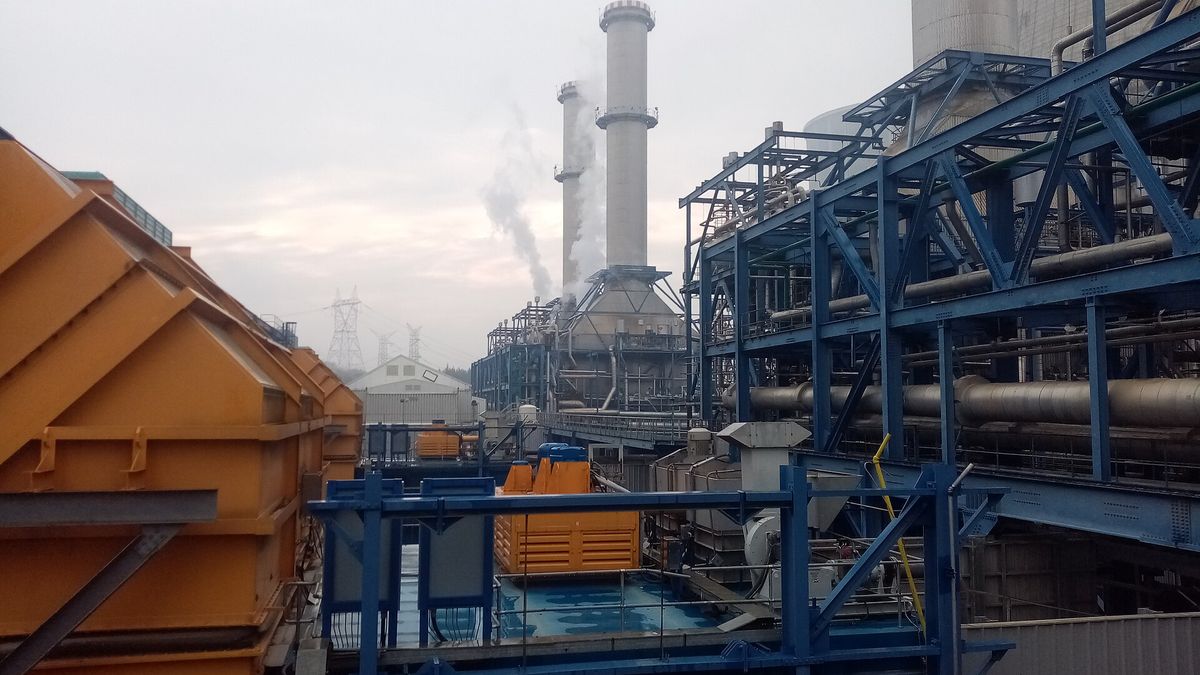
The first project, named Project Star, was announced by Seoul's industry ministry on Oct. 1. It is a 6,472-megawatt combined-cycle plant in Encinal, Texas, built to power artificial intelligence data centers at a total cost of $22.3 billion. Related Companies and NextEra Energy are leading it. The first phase is due to start commercial operation in 2029, with full operation targeted for 2032, the ministry said. The Korea Times reported on Oct. 5 that the $2.4 billion first injection was earmarked for the plant.
Seoul built in protections. Every project runs through an umbrella special purpose vehicle with a separate vehicle for each project. Proceeds are split equally between the two countries until Korea recovers its principal plus interest, priced off the 20-year U.S. Treasury yield plus a spread set project by project. A legally binding cap limits the $200 billion strategic tranche to $20 billion a year.
Industry Minister Kim Jung-kwan said the government had put commercial viability first so that "not a penny goes to waste."
The nuclear ask and the Alaska dispute
The bigger numbers are still unsettled. Project Power would spend up to $120 billion on eight nuclear reactors, including two of Korea's APR1400 units, made up of $100 billion in construction costs and a $20 billion contingency fund. Korean companies would take a stake of 5% to 10% in Westinghouse, with final terms still under negotiation, The Korea Times reported. Korea Electric Power Corp. and Korea Hydro & Nuclear Power are among the parties expected to sign the framework. Kim said final decisions on individual projects would follow site, schedule and commercial reviews and parliamentary procedures.
Washington has requested $10 billion for the program by year-end, to order long-lead equipment for the reactors, The Korea Times reported. Finance Minister Lee said an advance payment would require the completion of domestic legal procedures, including parliamentary steps, the paper reported on Oct. 6. Key terms, including the timing and amount of investment recovery, remain under negotiation.
Project North is more contentious. It is a review of a roughly 1,300-kilometer gas pipeline from Alaska's North Slope to Nikiski, with an export terminal to ship liquefied natural gas to Korea, Japan and other Asian buyers. U.S. Commerce Secretary Howard Lutnick has said Korea is moving to invest more than $50 billion in the project. Seoul says no commitment or amount has been agreed. Kim said Korea had agreed only to begin work "subject to commercial reasonableness." President Donald Trump has threatened to double tariffs if Seoul does not join the project, The Korea Times reported on Oct. 5.
Section 301 probe still hangs over chips and autos
Tariffs remain the other open file. The United States has already imposed Section 301 tariffs of 12.5% on Korea over forced-labor concerns. Goods already covered by Section 232 measures, such as autos, semiconductors and steel, are exempt, The Korea Times said.
A second Section 301 investigation, into industrial overcapacity in 16 economies including Korea, covers chips, electric vehicle batteries, cars and steel. U.S. Trade Representative Jamieson Greer has said findings are expected within weeks, The Korea Times reported on Oct. 5; they had earlier been expected by the end of August, Yonhap reported. Kim has said the two countries agreed that any tariffs from the probe would not exceed 15%.
The stakes are large. Korea exported $122.9 billion of goods to the U.S. last year and imported $73.4 billion, making it Korea's second-largest trading partner, according to Yonhap. The October trade data showed exports jumping 93.7% on chip sales, and carmakers have already felt the swing: Kia's third-quarter operating profit rose 24.3% on tariff relief.
Some companies are hedging by building in the U.S. Gaon Cable, a unit of LS Cable & System, plans to spend about $50 million on two new lines at its plant in Tarboro, North Carolina, doubling cable capacity by 2027 as U.S. tariffs on steel, aluminum and copper products tighten, The Korea Times reported on Wednesday.
The next checkpoints are the overcapacity findings from Washington and the year-end date for the $10 billion nuclear payment, which Seoul says must first clear parliamentary procedures.
Sources
- The Korea Times (Yonhap): Seoul, Washington pick Texas power plant as 1st project under strategic investment (Oct. 1, 2026)
- The Korea Times: Korea begins US investment but trade pressure persists (Oct. 5, 2026)
- The Korea Times: Korea reaffirms Alaska LNG investment hinges on commercial viability (Oct. 6, 2026)
- Korea JoongAng Daily (Yonhap): Industry minister again heads for Washington amid growing U.S. tariff pressure (Aug. 16, 2026)
- The Korea Times: National Assembly passes bill on $350 bil. investment in US (March 12, 2026)
- The Korea Times: Korea, US unveil 3 investments in energy projects (Oct. 1, 2026)
- The Korea Times (Yonhap): Finance minister discusses economic ties, cooperation with US ambassador (Nov. 2, 2026)
- The Korea Times: Gaon Cable expands US production capacity amid rising tariffs (Nov. 4, 2026)
Our standards: Capital Times reports under the principles set out in our Editorial Standards and Ethics Policy. Spotted an error? Report it to our editors.