Korea's Foreign Reserves Rise $2.6 Billion to $443.16 Billion as Won Holds Near 1,340
A jump in bank dollar deposits offset a drop in Treasury holdings, while bond yields sit near multi-month lows ahead of the Bank of Korea's Nov. 26 rate decision.
What to know
- South Korea's foreign reserves rose $2.6 billion in October to $443.16 billion, rebounding after a September decline, Bank of Korea data showed.
- The won closed at 1,341 per dollar on Nov. 3, while the three-year Treasury yield slipped to 3.736% and the five-year yield fell to 3.87%.
- The Bank of Korea holds its benchmark rate at 3% and meets again on Nov. 26, when economists such as Citi's Kim Jin-wook expect a quarter-point hike.
SEOUL
South Korea's foreign reserves rose $2.6 billion in October to $443.16 billion, the Bank of Korea said Wednesday, recovering from a September dip as dollar deposits held by local banks climbed and the central bank booked investment gains on its portfolio, Yonhap reported.
The figure gives Seoul a slightly larger cushion at a moment when the won is steady but not strong, bond yields have fallen to multi-month lows and all six economists in an October Yonhap survey expect the central bank to deliver its third rate increase since July at its next meeting. For investors in Hong Kong, Singapore and Tokyo who hold Korean government bonds or price Kospi exposure in dollars, all three moving parts feed into the same decision on Nov. 26.
What Moved Korea's Foreign Reserves
The mix inside the reserves shifted more than the total. Foreign securities, which include U.S. Treasurys, fell $3.59 billion during the month to $382.43 billion, according to the central bank data. They still make up 86.3% of the total.
The offset came from deposits. Foreign currency deposits rose $6.32 billion to $36.27 billion, which the Bank of Korea attributed to larger dollar balances placed by financial institutions. Special drawing rights at the International Monetary Fund slipped $70 million to $15.41 billion. Gold holdings were unchanged at $4.79 billion.
The rise follows a decline in September, which had ended three straight months of gains starting in June. A swing driven by bank deposits is less durable than one driven by investment income, because lenders can draw those balances down again when they need dollars.
Won and Korean Bond Yields Before the Bank of Korea Decision
The won closed at 1,341 per dollar at 3:30 p.m. on Tuesday, 2.8 won weaker than the previous session, according to Yonhap. That was a bad day for Seoul equities: the Kospi fell 3.59% to 5,648.79 as chip stocks slid on worries about returns from artificial intelligence spending, and foreign investors sold a net 1.5 trillion won ($1.1 billion at Tuesday's rate) of shares. The currency still held near the 1,330 level where it traded in mid-October, when JPMorgan Korea economist Park Seok-gil told Yonhap that a firmer won had helped offset higher oil prices.
Bonds rallied on the same day. The three-year Treasury yield eased 0.4 basis point to 3.736%, and the five-year yield dropped 2.2 basis points to 3.87%, Yonhap reported. The 10-year yield fell to about 4% on Oct. 27, its lowest since May, according to Trading Economics, which tied the move to government plans to cut net bond issuance by 12.5 trillion won in 2027.
That supply story matters for foreign holders. Trading Economics reported that a new Future Response Fund, filled by a tax windfall from semiconductor profits, is expected to receive 162.3 trillion won next year, and that the government could tap it to reduce borrowing if yields jump or markets turn rough. Fewer new bonds would support prices even if the central bank keeps raising its policy rate.
The won ended October as one of a mixed group of Asian currencies.
The Case for a November Hike
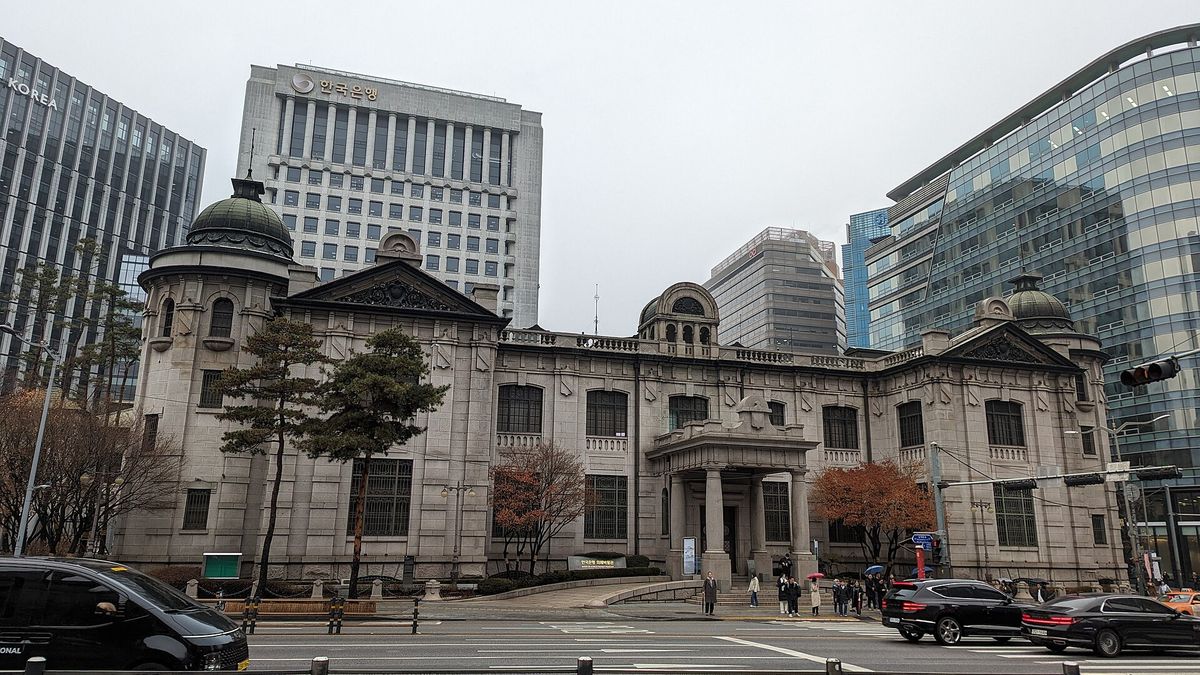
The Bank of Korea raised its benchmark rate by a quarter point in July and again in August, then held it at 3% on Oct. 22 to judge the effect of those moves. Its next Monetary Policy Board meeting is on Nov. 26, The Korea Times reported.
Recent data have pushed in one direction. Third-quarter GDP grew 1% from the prior quarter, more than three times the central bank's 0.3% forecast. Consumer prices rose 2.8% in October from a year earlier, slower than September's 2.9%, but core inflation also stood at 2.8%. Deputy Gov. Lee Ji-ho said Tuesday that inflation should stay in the high 2% range in November because of oil prices and rising core prices, according to Yonhap.
Borrowing has not cooled either. Household loans at the five largest banks rose 2.77 trillion won in October to 783.6 trillion won, with mortgages up for a seventh straight month, Yonhap reported, even after the two increases and tighter lending rules.
Abroad, the U.S. Federal Reserve held its rate at 3.75% to 4% on Oct. 28 but kept attention on a possible December increase. Citibank economist Kim Jin-wook wrote that the Bank of Korea is likely to raise rates by 0.25 percentage point in November and again in February 2027, taking the policy rate to a 3.5% peak, The Korea Times reported. Senior Deputy Gov. Kwon Min-soo said after the Fed decision that the bank would watch domestic financial and foreign exchange markets closely, citing Middle East tensions, fiscal worries in major economies and uncertainty over AI investment.
A hike would narrow the gap between Korean and U.S. policy rates, which tends to support the won, and would test how far the recent drop in bond yields can run. Markets are also watching the outcome of the U.S. midterm elections, held Nov. 3, for its effect on the dollar.
November's consumer price figures will not be out before the board meets, so the October numbers, the reserve data and the won's level are what policymakers will have in hand on Nov. 26.
Sources
- Korea JoongAng Daily (Yonhap): Foreign reserves rebound in October (Nov. 4, 2026)
- Korea JoongAng Daily (Yonhap): Kospi dips over 3% following escalating AI concerns (Nov. 3, 2026)
- The Korea Times: Fed's hawkish hold strengthens case for BOK's hike in November (Oct. 29, 2026)
- The Korea Times (Yonhap): BOK sees consumer inflation remaining near 3% in November (Nov. 3, 2026)
- Trading Economics: South Korea 10-Year Yield Lowest Since May (Oct. 27, 2026)
- Korea JoongAng Daily (Yonhap): Bank of Korea expected to hold interest rate at 3%, hike possible in November (Oct. 18, 2026)
- The Korea Times (Yonhap): Household loans again rise in Oct. despite tightened rules, higher rates (Nov. 2, 2026)
Our standards: Capital Times reports under the principles set out in our Editorial Standards and Ethics Policy. Spotted an error? Report it to our editors.